


Page 343 - Water Loss Control
P. 343
312    Cha pte r  Ei g h tee n


                                                                  Pressure
                                                                  45

                                                                  20
                         Reservoir                                   Pressure controlled at peak flow
                                                                                  h
                                                                       6   12  15  Time

                      100


                                                                                   Critical point
                                                    PRV
                      Flow                                    Outlet pressure
                       125                                    45


                        25                                    20
                                        h                                     h
                             6  12  15  Time                        6  12  15 Time

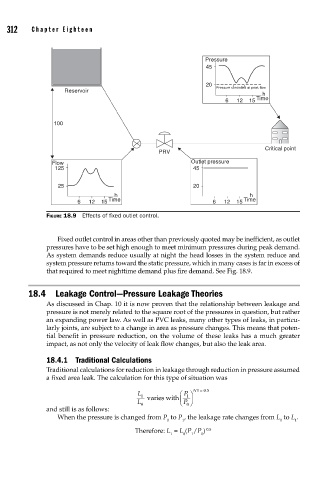
                    FIGURE 18.9  Effects of fi xed outlet control.


                       Fixed outlet control in areas other than previously quoted may be inefficient, as outlet
                    pressures have to be set high enough to meet minimum pressures during peak demand.
                    As system demands reduce usually at night the head losses in the system reduce and
                    system pressure returns toward the static pressure, which in many cases is far in excess of
                    that required to meet nighttime demand plus fire demand. See Fig. 18.9.


               18.4  Leakage Control—Pressure Leakage Theories
                    As discussed in Chap. 10 it is now proven that the relationship between leakage and
                    pressure is not merely related to the square root of the pressures in question, but rather
                    an expanding power law. As well as PVC leaks, many other types of leaks, in particu-
                    larly joints, are subject to a change in area as pressure changes. This means that poten-
                    tial benefit in pressure reduction, on the volume of these leaks has a much greater
                    impact, as not only the velocity of leak flow changes, but also the leak area.

                    18.4.1 Traditional Calculations
                    Traditional calculations for reduction in leakage through reduction in pressure assumed
                    a fixed area leak. The calculation for this type of situation was
                                                                  .
                                              L           ⎛  P ⎞ N1 =  05
                                               1  varies with ⎜  1 ⎟
                                              L 0         ⎝ P ⎠
                                                            0
                    and still is as follows:
                       When the pressure is changed from P  to P , the leakage rate changes from L  to L .
                                                       0   1                           0   1
                                              Therefore: L  = L (P /P )  0.5
                                                        1  0  1  0

