


Page 127 - Advanced Gas Turbine Cycles
P. 127
Chapter 6. ‘Wet’ gas turbine plants           99

             Combined STIG
                                        Steam


                                                                 Water


                              Air
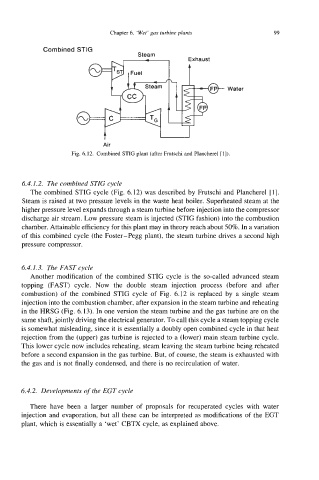
                     Fig. 6.12. Combined STIG plant (after Frutschi and Plancherel [I]).


       6.4.1.2. The combined STIG cycle
          The combined STIG cycle (Fig. 6.12) was described by  Frutschi and Plancherel [I].
       Steam is raised at two pressure levels in the waste heat boiler. Superheated steam at the
       higher pressure level expands through a steam turbine before injection into the compressor
       discharge air stream. Low pressure steam is injected (STIG fashion) into the combustion
       chamber. Attainable efficiency for this plant may in theory reach about 50%. In a variation
       of this combined cycle (the Foster-Pegg  plant), the steam turbine drives a second high
       pressure compressor.


       6.4.1.3. The FAST cycle
          Another modification of the combined STIG cycle is the  so-called advanced steam
       topping  (FAST)  cycle.  Now  the  double  steam  injection  process  (before  and  after
       combustion) of  the  combined STIG cycle of  Fig.  6.12 is  replaced by  a  single steam
       injection into the combustion chamber, after expansion in the steam turbine and reheating
       in the HRSG (Fig. 6.13). In one version the steam turbine and the gas turbine are on the
       same shaft, jointly driving the electrical generator. To call this cycle a steam topping cycle
       is somewhat misleading, since it is essentially a doubly open combined cycle in that heat
       rejection from the (upper) gas turbine is rejected to a (lower) main steam turbine cycle.
       This lower cycle now includes reheating, steam leaving the steam turbine being reheated
       before a second expansion in the gas turbine. But, of course, the steam is exhausted with
       the gas and is not finally condensed, and there is no recirculation of water.


       6.4.2. Developments of  the EGT cycle

         There  have  been  a  larger  number  of  proposals  for  recuperated cycles  with  water
       injection and evaporation, but all these can be interpreted as modifications of  the EGT
       plant, which is essentially a ‘wet’ CBTX cycle, as explained above.

