


Page 192 - Advances in bioenergy (2016)
P. 192
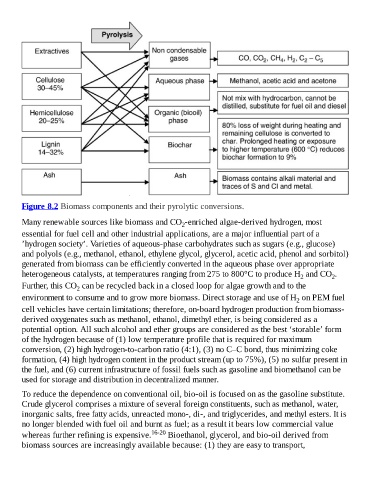
Figure 8.2 Biomass components and their pyrolytic conversions.

        Many renewable sources like biomass and CO -enriched algae-derived hydrogen, most
                                                             2
        essential for fuel cell and other industrial applications, are a major influential part of a
        ’hydrogen society’. Varieties of aqueous-phase carbohydrates such as sugars (e.g., glucose)
        and polyols (e.g., methanol, ethanol, ethylene glycol, glycerol, acetic acid, phenol and sorbitol)
        generated from biomass can be efficiently converted in the aqueous phase over appropriate
        heterogeneous catalysts, at temperatures ranging from 275 to 800°C to produce H  and CO .
                                                                                                    2          2
        Further, this CO  can be recycled back in a closed loop for algae growth and to the
                          2
        environment to consume and to grow more biomass. Direct storage and use of H  on PEM fuel
                                                                                                   2
        cell vehicles have certain limitations; therefore, on-board hydrogen production from biomass-
        derived oxygenates such as methanol, ethanol, dimethyl ether, is being considered as a
        potential option. All such alcohol and ether groups are considered as the best ‘storable’ form
        of the hydrogen because of (1) low temperature profile that is required for maximum
        conversion, (2) high hydrogen-to-carbon ratio (4:1), (3) no C–C bond, thus minimizing coke

        formation, (4) high hydrogen content in the product stream (up to 75%), (5) no sulfur present in
        the fuel, and (6) current infrastructure of fossil fuels such as gasoline and biomethanol can be
        used for storage and distribution in decentralized manner.

        To reduce the dependence on conventional oil, bio-oil is focused on as the gasoline substitute.
        Crude glycerol comprises a mixture of several foreign constituents, such as methanol, water,
        inorganic salts, free fatty acids, unreacted mono-, di-, and triglycerides, and methyl esters. It is
        no longer blended with fuel oil and burnt as fuel; as a result it bears low commercial value
        whereas further refining is expensive.     16-20  Bioethanol, glycerol, and bio-oil derived from
        biomass sources are increasingly available because: (1) they are easy to transport,

