


Page 402 - Applied Process Design For Chemical And Petrochemical Plants Volume III
P. 402
66131_Ludwig_CH11A  5/30/2001 4:50 PM  Page 359


                                                                Refrigeration Systems                                      359

                                                                           Enthalpy of saturated vapor at 105°F   633.4 Btu/lb.
                           Vapor 292°              Dew Point
                                  In  Gas Cooling                          Sensible heat loss of vapor   758   633.4   124.6 Btu/lb.
                                                                           Sensible heat duty of condenser   (124.6)(7,936)
                                                  Condensing
                                                           105°F.                                     988,000 Btu/hr.
                          Water 98.5°                                        Latent heat duty of condenser   (472.3)(7,936)
                                 Out                                                                  3,740,000 Btu/hr
                                              96.7°        90°F.           Total heat duty   988,000   3,740,000   4,728,000 Btu/hr

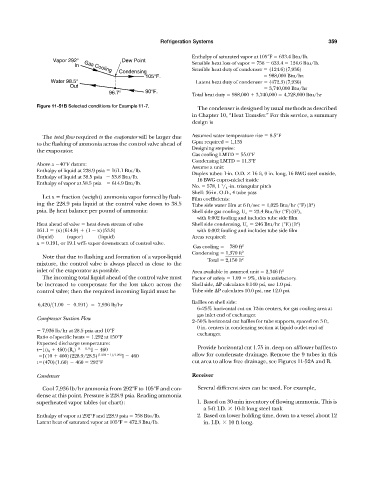
                     Figure 11-51B Selected conditions for Example 11-7.
                                                                             The condenser is designed by usual methods as described
                                                                           in Chapter 10, “Heat Transfer.” For this service, a summary
                                                                           design is

                       The total flow required to the evaporator will be larger due  Assumed water temperature rise   8.5°F
                     to the flashing of ammonia across the control valve ahead of  Gpm required   1,135
                                                                           Designing stepwise:
                     the evaporator.
                                                                           Gas cooling LMTD   55.0°F
                                                                           Condensing LMTD   11.3°F
                     Above a  40°F datum:
                                                                           Assume a unit:
                     Enthalpy of liquid at 228.9 psia   161.1 Btu/lb.
                                                                           Duplex tubes: 1-in. O.D.   16 ft, 0 in. long, 16 BWG steel outside,
                     Enthalpy of liquid at 38.5 psia     53.8 Btu/lb.
                                                                             16 BWG cupro-nickel inside
                     Enthalpy of vapor at 58.5 psia    614.9 Btu/lb.
                                                                                     1
                                                                           No.   578, 1  / 4 -in. triangular pitch
                                                                           Shell: 36-in. O.D., 4 tube pass
                       Let x   fraction (weight) ammonia vapor formed by flash-  Film coefficients:
                     ing the 228.9 psia liquid at the control valve down to 38.5  Tube side water film at 6 ft/sec   1,025 Btu/hr (°F)(ft )
                                                                                                                     2
                     psia. By heat balance per pound of ammonia:           Shell side gas cooling, U o   23.4 Btu/hr (°F)(ft ),
                                                                                                               2
                                                                             with 0.002 fouling and includes tube side film
                                                                                                                2
                     Heat ahead of valve   heat down stream of valve       Shell side condensing, U o   246 Btu/hr (°F.)(ft )
                     161.1   (x)(614.9)   (1   x)(53.8)                      with 0.002 fouling and includes tube side film
                     (liquid)   (vapor)   (liquid)                         Areas required:
                     x   0.191, or 19.1 wt% vapor downstream of control valve.
                                                                            Gas cooling   0780 ft 2
                                                                           Condensing   1,370 ft 2
                       Note that due to flashing and formation of a vapor-liquid
                                                                                 Total   2,150 ft 2
                     mixture, the control valve is always placed as close to the
                     inlet of the evaporator as possible.                  Area available in assumed unit   2,346 ft 2
                       The incoming total liquid ahead of the control valve must  Factor of safety   1.09   9%, this is satisfactory.
                     be increased to compensate for the loss taken across the  Shell side,  P calculates 0.140 psi, use 1.0 psi.
                     control valve; then the required incoming liquid must be  Tube side  P calculates 10.0 psi, use 12.0 psi.
                                                                           Baffles on shell side:
                      6,420>11.00     0.1912     7,936 lb>hr
                                                                             6—25% horizontal cut on 12-in centers, for gas cooling area at
                                                                             gas inlet end of exchanger.
                     Compressor Suction Flow
                                                                           2—50% horizontal cut baffles for tube supports, spaced on 3 ft,
                                                                             0 in. centers in condensing section at liquid outlet end of
                       7,936 lb/hr at 28.5 psia and 10°F
                                                                             exchanger.
                     Ratio of specific heats   1.292 at 150°F
                     Expected discharge temperature:
                     t [(t 8   460)(R c )  (k   1)/k ]   460                 Provide horizontal cut 1.75 in. deep on all lower baffles to
                     t [(10   460)(228.9/28.5) (1.292   1)/1.292 ]   460   allow for condensate drainage. Remove the 9 tubes in this
                     t (470)(1.60)   460   292°F                           cut area to allow free drainage, see Figures 11-52A and B.

                     Condenser                                             Receiver
                       Cool 7,936 lb/hr ammonia from 292°F to 105°F and con-  Several different sizes can be used. For example,
                     dense at this point. Pressure is 228.9 psia. Reading ammonia
                     superheated vapor tables (or chart):                    1. Based on 30-min inventory of flowing ammonia. This is
                                                                               a 5-ft I.D.   10-ft long steel tank
                     Enthalpy of vapor at 292°F and 228.9 psia   758 Btu/lb.  2. Based on lower holding time, down to a vessel about 12
                     Latent heat of saturated vapor at 105°F   472.3 Btu/lb.   in. I.D.   10 ft long.

