


Page 405 - Applied Process Design For Chemical And Petrochemical Plants Volume III
P. 405
66131_Ludwig_CH11A  5/30/2001 4:50 PM  Page 362


                       362                       Applied Process Design for Chemical and Petrochemical Plants

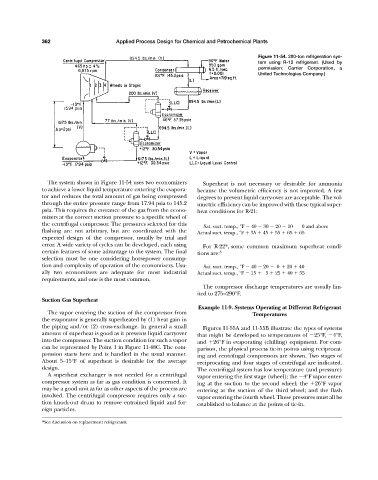
                                                                                                  Figure 11-54. 200-ton refrigeration sys-
                                                                                                  tem using R-12 refrigerant. (Used by
                                                                                                  permission: Carrier Corporation, a
                                                                                                  United Technologies Company.)


                         The system shown in Figure 11-54 uses two economizers  Superheat is not necessary or desirable for ammonia
                       to achieve a lower liquid temperature entering the evapora-  because the volumetric efficiency is not improved. A few
                       tor and reduces the total amount of gas being compressed  degrees to prevent liquid carry-over are acceptable. The vol-
                       through the entire pressure range from 17.94 psia to 145.2  umetric efficiency can be improved with these typical super-
                       psia. This requires the entrance of the gas from the econo-  heat conditions for R-21:
                       mizers at the correct suction pressure to a specific wheel of
                       the centrifugal compressor. The pressures selected for this
                                                                               Sat. suct. temp., °F   40   30   20   10       0 and above
                       flashing are not arbitrary, but are coordinated with the  Actual suct. temp., °F   35   45   55   65   65
                       expected design of the compressor, usually by trial and
                       error. A wide variety of cycles can be developed, each using  For R-22*, some common maximum superheat condi-
                       certain features of some advantage to the system. The final  tions are: 3
                       selection must be one considering horsepower consump-
                       tion and complexity of operation of the economizers. Usu-  Sat. suct. temp., °F   40   20   0   20   40
                       ally two economizers are adequate for most industrial  Actual suct. temp., °F   15   5   25   40   55
                       requirements, and one is the most common.
                                                                               The compressor discharge temperatures are usually lim-
                                                                             ited to 275—290°F.
                       Suction Gas Superheat
                                                                             Example 11-9. Systems Operating at Different Refrigerant
                         The vapor entering the suction of the compressor from                  Temperatures
                       the evaporator is generally superheated by (1) heat gain in
                       the piping and/or (2) cross-exchange. In general a small  Figures 11-55A and 11-55B illustrate the types of systems
                       amount of superheat is good as it prevents liquid carryover  that might be developed to temperatures of  25°F,  4°F,
                       into the compressor. The suction condition for such a vapor  and  26°F in evaporating (chilling) equipment. For com-
                       can be represented by Point 1 in Figure 11-48C. The com-  parison, the physical process tie-in points using reciprocat-
                       pression starts here and is handled in the usual manner.  ing and centrifugal compressors are shown. Two stages of
                       About 5—15°F of superheat is desirable for the average  reciprocating and four stages of centrifugal are indicated.
                       design.                                               The centrifugal system has low temperature (and pressure)
                         A superheat exchanger is not needed for a centrifugal  vapor entering the first stage (wheel); the  4°F vapor enter-
                       compressor system as far as gas condition is concerned. It  ing at the suction to the second wheel; the  26°F vapor
                       may be a good unit as far as other aspects of the process are  entering at the suction of the third wheel; and the flash
                       involved. The centrifugal compressor requires only a suc-  vapor entering the fourth wheel. These pressures must all be
                       tion knock-out drum to remove entrained liquid and for-  established to balance at the points of tie-in.
                       eign particles.

                       *See discussion on replacement refrigerants.

