


Page 179 - Design of Solar Thermal Power Plants
P. 179
164         3. GENERAL DESIGN OF A SOLAR THERMAL POWER PLANT

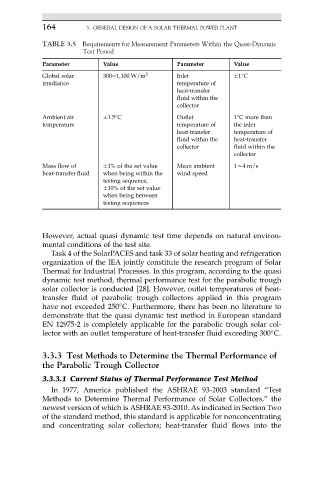
            TABLE 3.5 Requirements for Measurement Parameters Within the Quasi-Dynamic
                       Test Period

            Parameter        Value               Parameter      Value

            Global solar     300e1,100 W/m 2     Inlet           1 C
            irradiance                           temperature of
                                                 heat-transfer
                                                 fluid within the
                                                 collector
            Ambient air       1.5 C              Outlet         1 C more than


            temperature                          temperature of  the inlet
                                                 heat-transfer  temperature of
                                                 fluid within the  heat-transfer
                                                 collector      fluid within the
                                                                collector
            Mass flow of       1% of the set value  Mean ambient  1w4 m/s
            heat-transfer fluid  when being within the  wind speed
                             testing sequence,
                              10% of the set value
                             when being between
                             testing sequences


            However, actual quasi dynamic test time depends on natural environ-
            mental conditions of the test site.
               Task 4 of the SolarPACES and task 33 of solar heating and refrigeration
            organization of the IEA jointly constitute the research program of Solar
            Thermal for Industrial Processes. In this program, according to the quasi
            dynamic test method, thermal performance test for the parabolic trough
            solar collector is conducted [28]. However, outlet temperatures of heat-
            transfer fluid of parabolic trough collectors applied in this program
            have not exceeded 250 C. Furthermore, there has been no literature to

            demonstrate that the quasi dynamic test method in European standard
            EN 12975-2 is completely applicable for the parabolic trough solar col-
            lector with an outlet temperature of heat-transfer fluid exceeding 300 C.

            3.3.3 Test Methods to Determine the Thermal Performance of
            the Parabolic Trough Collector
            3.3.3.1 Current Status of Thermal Performance Test Method
               In 1977, America published the ASHRAE 93-2003 standard “Test
            Methods to Determine Thermal Performance of Solar Collectors,” the
            newest version of which is ASHRAE 93-2010. As indicated in Section Two
            of the standard method, this standard is applicable for nonconcentrating
            and concentrating solar collectors; heat-transfer fluid flows into the

