


Page 182 - Design of Solar Thermal Power Plants
P. 182
3.3 THERMAL PERFORMANCE OF PARABOLIC TROUGH COLLECTOR  167

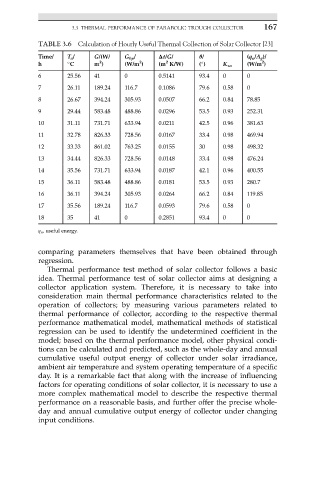
           TABLE 3.6 Calculation of Hourly Useful Thermal Collection of Solar Collector [23]

           Time/   T a /  G/(W/    G bp /   Dt/G/      q/           (q u /A g )/
                            2          2      2                         2
                                                             K sa
           h        C     m )      (W/m )   (m K/W)    ( )          (W/m )
           6       25.56  41       0        0.5141     93.4  0      0
           7       26.11  189.24   116.7    0.1086     79.6  0.58   0
           8       26.67  394.24   305.93   0.0507     66.2  0.84   78.85
           9       29.44  583.48   488.86   0.0296     53.5  0.93   252.31
           10      31.11  731.71   633.94   0.0211     42.5  0.96   381.63
           11      32.78  826.33   728.56   0.0167     33.4  0.98   469.94
           12      33.33  861.02   763.25   0.0155     30    0.98   498.32
           13      34.44  826.33   728.56   0.0148     33.4  0.98   476.24
           14      35.56  731.71   633.94   0.0187     42.1  0.96   400.55
           15      36.11  583.48   488.86   0.0181     53.5  0.93   280.7
           16      36.11  394.24   305.93   0.0264     66.2  0.84   119.85
           17      35.56  189.24   116.7    0.0593     79.6  0.58   0
           18      35     41       0        0.2851     93.4  0      0

           q u , useful energy.

           comparing parameters themselves that have been obtained through
           regression.
              Thermal performance test method of solar collector follows a basic
           idea. Thermal performance test of solar collector aims at designing a
           collector application system. Therefore, it is necessary to take into
           consideration main thermal performance characteristics related to the
           operation of collectors; by measuring various parameters related to
           thermal performance of collector, according to the respective thermal
           performance mathematical model, mathematical methods of statistical
           regression can be used to identify the undetermined coefficient in the
           model; based on the thermal performance model, other physical condi-
           tions can be calculated and predicted, such as the whole-day and annual
           cumulative useful output energy of collector under solar irradiance,
           ambient air temperature and system operating temperature of a specific
           day. It is a remarkable fact that along with the increase of influencing
           factors for operating conditions of solar collector, it is necessary to use a
           more complex mathematical model to describe the respective thermal
           performance on a reasonable basis, and further offer the precise whole-
           day and annual cumulative output energy of collector under changing
           input conditions.

