


Page 173 - Designing Sociable Robots
P. 173
breazeal-79017  book  March 18, 2002  14:7


                       154                                                              Chapter 9


                       Table 9.1
                       Data illustrating evidence for entrainment of human to robot.
                                                   Time Stamp (min:sec)  Time Between Disturbances (sec)

                       subject 1    start 15:20    15:20–15:33           13
                                                   15:37–15:54           21
                                                   15:56–16:15           19
                                                   16:20–17:25           70
                                    end 18:07      17:30–18:07           37+
                       subject 2    start 6:43      6:43–6:50             7
                                                    6:54–7:15            21
                                                    7:18–8:02            44
                                    end 8:43        8:06–8:43            37+
                       subject 3    start 4:52      4:52–4:58            10
                                                    5:08–5:23            15
                                                    5:30–5:54            24
                                                    6:00–6:53            53
                                                    6:58–7:16            18
                                                    7:18–8:16            58
                                                    8:25–9:10            45
                                    end 10:40       9:20–10:40           80+


                       Table 9.2
                       Kismet’s turn-taking performance during proto-dialogue with three naive subjects. Significant disturbances are
                       small clusters of pauses and interruptions between Kismet and the subject until turn-taking becomes coordinated
                       again.
                                         Subject 1       Subject 2       Subject 3

                                         Data   Percent  Data   Percent  Data   Percent  Average
                       Clean Turns       35     83       45     85       83      78      82
                       Interrupts         4     10        4      7.5     16      15      11
                       Prompts            3      7        4      7.5      7       7       7
                       Significant Flow
                       Disturbances       3      7        3      5.7      7       7       6.5
                       Total Speaking Turns  42              53              106


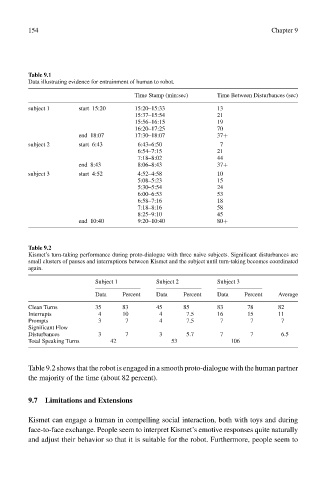
                       Table 9.2 shows that the robot is engaged in a smooth proto-dialogue with the human partner
                       the majority of the time (about 82 percent).


                       9.7 Limitations and Extensions

                       Kismet can engage a human in compelling social interaction, both with toys and during
                       face-to-face exchange. People seem to interpret Kismet’s emotive responses quite naturally
                       and adjust their behavior so that it is suitable for the robot. Furthermore, people seem to

