


Page 597 - Dynamics of Mechanical Systems
P. 597
0593_C17_fm  Page 578  Tuesday, May 7, 2002  7:12 AM


                       578                                                 Dynamics of Mechanical Systems


                       N


                                   P
                                            Pitch Circles         Pitch Circles    P      "Pulleys" (base
                                                                                                 circles)
                                                                               "Belt" (line of
                                                                                 action)
                                              Pressure Line
                                              (line of action)


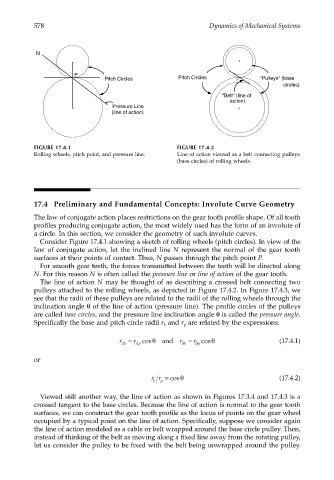
                       FIGURE 17.4.1                             FIGURE 17.4.2
                       Rolling wheels, pitch point, and pressure line.  Line of action viewed as a belt connecting pulleys
                                                                 (base circles) of rolling wheels.


                       17.4 Preliminary and Fundamental Concepts: Involute Curve Geometry

                       The law of conjugate action places restrictions on the gear tooth profile shape. Of all tooth
                       profiles producing conjugate action, the most widely used has the form of an involute of
                       a circle. In this section, we consider the geometry of such involute curves.
                        Consider Figure 17.4.1 showing a sketch of rolling wheels (pitch circles). In view of the
                       law of conjugate action, let the inclined line  N represent the normal of the gear tooth
                       surfaces at their points of contact. Thus, N passes through the pitch point P.
                        For smooth gear teeth, the forces transmitted between the teeth will be directed along
                       N. For this reason N is often called the pressure line or line of action of the gear tooth.
                        The line of action  N may be thought of as describing a crossed belt connecting two
                       pulleys attached to the rolling wheels, as depicted in Figure 17.4.2. In Figure 17.4.3, we
                       see that the radii of these pulleys are related to the radii of the rolling wheels through the
                       inclination angle θ of the line of action (pressure line). The profile circles of the pulleys
                       are called base circles, and the pressure line inclination angle θ is called the pressure angle.
                       Specifically the base and pitch circle radii r  and r  are related by the expressions:
                                                             b
                                                                   p
                                                r =  r cosθ and   r =  r cosθ                  (17.4.1)
                                                 Ab  Ap           Bb   Bp

                       or

                                                         rr = cosθ                             (17.4.2)
                                                          b  p

                        Viewed still another way, the line of action as shown in Figures 17.3.4 and 17.4.3 is a
                       crossed tangent to the base circles. Because the line of action is normal to the gear tooth
                       surfaces, we can construct the gear tooth profile as the locus of points on the gear wheel
                       occupied by a typical point on the line of action. Specifically, suppose we consider again
                       the line of action modeled as a cable or belt wrapped around the base circle pulley. Then,
                       instead of thinking of the belt as moving along a fixed line away from the rotating pulley,
                       let us consider the pulley to be fixed with the belt being unwrapped around the pulley.

