


Page 598 - Dynamics of Mechanical Systems
P. 598
0593_C17_fm  Page 579  Tuesday, May 7, 2002  7:12 AM


                       Mechanical Components: Gears                                                579


                                                                                           Involute


                                                                                           Belt
                                                                Pulley


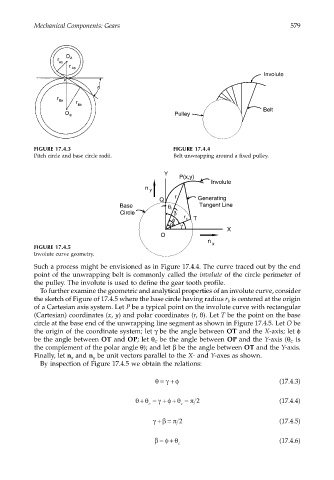
                       FIGURE 17.4.3                            FIGURE 17.4.4
                       Pitch circle and base circle radii.      Belt unwrapping around a fixed pulley.


                                                             Y
                                                                  P(x,y)
                                                                           Involute
                                                        n  y
                                                                r
                                                            Q          Generating
                                                Base                    Tangent Line
                                                              θ c
                                                Circle          β
                                                                   r
                                                                φ   b   T
                                                               θ  γ
                                                                                X
                                                            O
                                                                          n  x
                       FIGURE 17.4.5
                       Involute curve geometry.
                       Such a process might be envisioned as in Figure 17.4.4. The curve traced out by the end
                       point of the unwrapping belt is commonly called the involute of the circle perimeter of
                       the pulley. The involute is used to define the gear tooth profile.
                        To further examine the geometric and analytical properties of an involute curve, consider
                       the sketch of Figure of 17.4.5 where the base circle having radius r  is centered at the origin
                                                                                b
                       of a Cartesian axis system. Let P be a typical point on the involute curve with rectangular
                       (Cartesian) coordinates (x, y) and polar coordinates (r, θ). Let T be the point on the base
                       circle at the base end of the unwrapping line segment as shown in Figure 17.4.5. Let O be
                       the origin of the coordinate system; let γ be the angle between OT and the X-axis; let φ
                       be the angle between OT and OP; let θ  be the angle between OP and the Y-axis (θ  is
                                                          C
                                                                                                   C
                       the complement of the polar angle θ); and let β be the angle between OT and the Y-axis.
                       Finally, let n  and n  be unit vectors parallel to the X- and Y-axes as shown.
                                  x
                                        y
                        By inspection of Figure 17.4.5 we obtain the relations:
                                                           θ =+  φ                             (17.4.3)
                                                              γ
                                                      +
                                                     θθ = +   φ θ =  π 2                       (17.4.4)
                                                                +
                                                           γ
                                                         c        c
                                                          γβ+=  π 2                            (17.4.5)

                                                          β =+                                 (17.4.6)
                                                              φ θ
                                                                 c

