


Page 547 - Fair, Geyer, and Okun's Water and wastewater engineering : water supply and wastewater removal
P. 547
JWCL344_ch14_500-554.qxd  8/7/10  8:56 PM  Page 505


                                                                                             14.2 Gravity Sewers  505


                                                                                        Backfill
                                                               Backfill
                                                                                                   Concrete
                                                 9˝ clearance  90°                                  cradle
                                                  (minimum)                      3  d
                                                                                  4
                                                         (a) Pipe in earth trench   (b) Pipe in cradle


                                                                                                  Sheeting
                                                               Backfill
                                                                                                   6˝ gravel
                                                                                                  (minimum)
                                                   6˝ gravel
                                                  (minimum)

                                                                                                 Underdrain
                                                        (c) Pipe in rock trench    (d) Pipe with underdrain


                                                                                                         Natural
                                                                                                         ground


                                                                                          Access manholes
                                                                                          for large sewers
                                                            Terminal cleanout
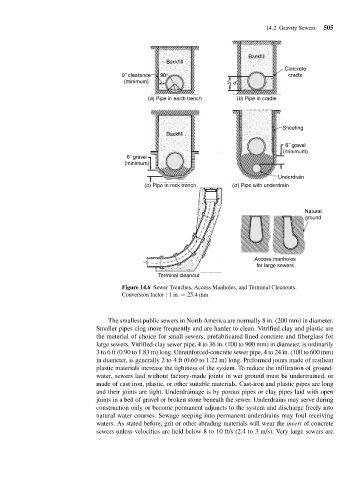
                                                 Figure 14.6 Sewer Trenches, Access Manholes, and Terminal Cleanouts.
                                                 Conversion factor : 1 in.   25.4 mm


                                             The smallest public sewers in North America are normally 8 in. (200 mm) in diameter.
                                         Smaller pipes clog more frequently and are harder to clean. Vitrified clay and plastic are
                                         the material of choice for small sewers, prefabricated lined concrete and fiberglass for
                                         large sewers. Vitrified-clay sewer pipe, 4 to 36 in. (100 to 900 mm) in diameter, is ordinarily
                                         3 to 6 ft (0.90 to 1.83 m) long. Unreinforced-concrete sewer pipe, 4 to 24 in. (100 to 600 mm)
                                         in diameter, is generally 2 to 4 ft (0.60 to 1.22 m) long. Preformed joints made of resilient
                                         plastic materials increase the tightness of the system. To reduce the infiltration of ground-
                                         water, sewers laid without factory-made joints in wet ground must be undertrained, or
                                         made of cast iron, plastic, or other suitable materials. Cast-iron and plastic pipes are long
                                         and their joints are tight. Underdrainage is by porous pipes or clay pipes laid with open
                                         joints in a bed of gravel or broken stone beneath the sewer. Underdrains may serve during
                                         construction only or become permanent adjuncts to the system and discharge freely into
                                         natural water courses. Sewage seeping into permanent underdrains may foul receiving
                                         waters. As stated before, grit or other abrading materials will wear the invert of concrete
                                         sewers unless velocities are held below 8 to 10 ft/s (2.4 to 3 m/s). Very large sewers are

