


Page 543 - Fair, Geyer, and Okun's Water and wastewater engineering : water supply and wastewater removal
P. 543
JWCL344_ch14_500-554.qxd  8/7/10  8:56 PM  Page 501


                                                                                        14.1 Drainage of Buildings  501

                                                                                      Caulked pipe sleeve
                                                                 Fresh-air inlet


                                                                                  Foundation
                                                         Street       Sidewalk
                                                                                    wall
                                                                                              Vent


                                                           Caulked pipe sleeve    Cleanout       Basement floor

                                                       Common or
                                                       public sewer
                                                                                                House drain;
                                                                                                  cast iron;
                                                           House sewer or service                slopes    8  in.
                                                                                                      1
                                                           connection; vitrified tile;  House or  or more per ft
                                                                    1
                                                          slopes about    4  in. per ft;  running trap
                                                        not less than 4 in. in diameter,
                                                           preferably 6 in. or more
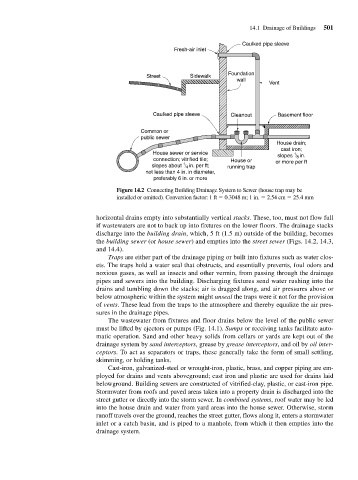
                                                Figure 14.2 Connecting Building Drainage System to Sewer (house trap may be
                                                installed or omitted). Conversion factor: 1 ft   0.3048 m; 1 in.   2.54 cm   25.4 mm


                                         horizontal drains empty into substantially vertical stacks. These, too, must not flow full
                                         if wastewaters are not to back up into fixtures on the lower floors. The drainage stacks
                                         discharge into the building drain, which, 5 ft (1.5 m) outside of the building, becomes
                                         the building sewer (or house sewer) and empties into the street sewer (Figs. 14.2, 14.3,
                                         and 14.4).
                                             Traps are either part of the drainage piping or built into fixtures such as water clos-
                                         ets. The traps hold a water seal that obstructs, and essentially prevents, foul odors and
                                         noxious gases, as well as insects and other vermin, from passing through the drainage
                                         pipes and sewers into the building. Discharging fixtures send water rushing into the
                                         drains and tumbling down the stacks; air is dragged along, and air pressures above or
                                         below atmospheric within the system might unseal the traps were it not for the provision
                                         of vents. These lead from the traps to the atmosphere and thereby equalize the air pres-
                                         sures in the drainage pipes.
                                             The wastewater from fixtures and floor drains below the level of the public sewer
                                         must be lifted by ejectors or pumps (Fig. 14.1). Sumps or receiving tanks facilitate auto-
                                         matic operation. Sand and other heavy solids from cellars or yards are kept out of the
                                         drainage system by sand interceptors, grease by grease interceptors, and oil by oil inter-
                                         ceptors. To act as separators or traps, these generally take the form of small settling,
                                         skimming, or holding tanks.
                                             Cast-iron, galvanized-steel or wrought-iron, plastic, brass, and copper piping are em-
                                         ployed for drains and vents aboveground; cast iron and plastic are used for drains laid
                                         belowground. Building sewers are constructed of vitrified-clay, plastic, or cast-iron pipe.
                                         Stormwater from roofs and paved areas taken into a property drain is discharged into the
                                         street gutter or directly into the storm sewer. In combined systems, roof water may be led
                                         into the house drain and water from yard areas into the house sewer. Otherwise, storm
                                         runoff travels over the ground, reaches the street gutter, flows along it, enters a stormwater
                                         inlet or a catch basin, and is piped to a manhole, from which it then empties into the
                                         drainage system.

