


Page 544 - Fair, Geyer, and Okun's Water and wastewater engineering : water supply and wastewater removal
P. 544
JWCL344_ch14_500-554.qxd  8/7/10  8:56 PM  Page 502


                    502  Chapter 14  Design of Sewer Systems

                                                                                                     Street line
                         Street line
                                                                             Sidewalk   Roadway
                                                  Sidewalk
                                       Roadway
                                                                                              Service connection
                          Service connection  30° bend
                                                                           Concrete chimney
                                                                                              Common sewer
                                              Common sewer
                                     Cross-section
                                                                                       Cross-section


                                                                        Sidewalk
                        Sidewalk                                                 Roadway
                                 Roadway
                                             30° bend
                          Service connection                                                     Service connection
                                                                                Concrete
                                              Y branch                          chimney

                                                                                Common
                                Common                 Street
                                  sewer      Flow                                  sewer     Flow      Street
                                                        line                                            line
                                         Plan                                             Plan

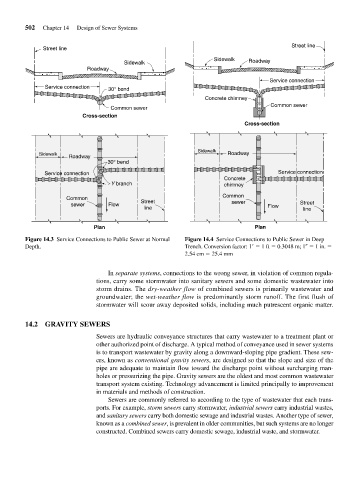
                    Figure 14.3 Service Connections to Public Sewer at Normal  Figure 14.4 Service Connections to Public Sewer in Deep
                    Depth.                                          Trench. Conversion factor: 1   1 ft   0.3048 m; 1   1 in.
                                                                    2.54 cm   25.4 mm


                                             In separate systems, connections to the wrong sewer, in violation of common regula-
                                         tions, carry some stormwater into sanitary sewers and some domestic wastewater into
                                         storm drains. The dry-weather flow of combined sewers is primarily wastewater and
                                         groundwater; the wet-weather flow is predominantly storm runoff. The first flush of
                                         stormwater will scour away deposited solids, including much putrescent organic matter.


                    14.2  GRAVITY SEWERS
                                         Sewers are hydraulic conveyance structures that carry wastewater to a treatment plant or
                                         other authorized point of discharge. A typical method of conveyance used in sewer systems
                                         is to transport wastewater by gravity along a downward-sloping pipe gradient. These sew-
                                         ers, known as conventional gravity sewers, are designed so that the slope and size of the
                                         pipe are adequate to maintain flow toward the discharge point without surcharging man-
                                         holes or pressurizing the pipe. Gravity sewers are the oldest and most common wastewater
                                         transport system existing. Technology advancement is limited principally to improvement
                                         in materials and methods of construction.
                                             Sewers are commonly referred to according to the type of wastewater that each trans-
                                         ports. For example, storm sewers carry stormwater, industrial sewers carry industrial wastes,
                                         and sanitary sewers carry both domestic sewage and industrial wastes. Another type of sewer,
                                         known as a combined sewer, is prevalent in older communities, but such systems are no longer
                                         constructed. Combined sewers carry domestic sewage, industrial waste, and stormwater.

