


Page 152 - Fluid Power Engineering
P. 152
126    Cha pte r  F o u r


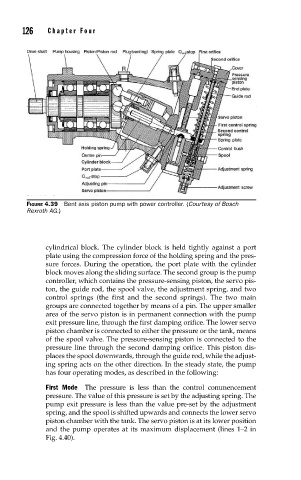
          FIGURE 4.39  Bent axis piston pump with power controller. (Courtesy of Bosch
          Rexroth AG.)


               cylindrical block. The cylinder block is held tightly against a port
               plate using the compression force of the holding spring and the pres-
               sure forces. During the operation, the port plate with the cylinder
               block moves along the sliding surface. The second group is the pump
               controller, which contains the pressure-sensing piston, the servo pis-
               ton, the guide rod, the spool valve, the adjustment spring, and two
               control springs (the first and the second springs). The two main
               groups are connected together by means of a pin. The upper smaller
               area of the servo piston is in permanent connection with the pump
               exit pressure line, through the first damping orifice. The lower servo
               piston chamber is connected to either the pressure or the tank, means
               of the spool valve. The pressure-sensing piston is connected to the
               pressure line through the second damping orifice. This piston dis-
               places the spool downwards, through the guide rod, while the adjust-
               ing spring acts on the other direction. In the steady state, the pump
               has four operating modes, as described in the following:
               First Mode  The pressure is less than the control commencement
                 pressure. The value of this pressure is set by the adjusting spring. The
               pump exit pressure is less than the value pre-set by the adjustment
               spring, and the spool is shifted upwards and connects the lower servo
               piston chamber with the tank. The servo piston is at its lower position
               and the pump operates at its maximum displacement (lines 1–2 in
               Fig. 4.40).

