


Page 608 - Fundamentals of Water Treatment Unit Processes : Physical, Chemical, and Biological
P. 608
Membrane Processes                                                                               563


            the addition of acid and anti-scalant followed by cartridge  (i.e., 0.80–0.85 for high heads required), longer operating life,
            filtration. The purpose of the acid was to lower the pH suffi-  less space, and greater flexibility in adding additional stages.
            ciently (from 7.2 to 6.8) to control CaCO 3 deposits on the  The usual total dynamic head required was 1050 kPa (353 ft).
            membranes. Polyacrylic acid anti-scalant was used. Cartridge  The difference between the design TDH and the usual oper-
            filtration was to remove silt and grit. Two pressure vessels of  ating TDH was substantial and could be wasted or matched to
            5 mm carridge filters were used; a 70 kPa (10 psi) pressure  the conditions by a variable speed control. The latter was
            drop was assumed. Table 17.9 provides selected design data.  selected based on savings in energy costs.
            17.7.1.3.1  Pumps                                  17.7.1.3.2  Posttreatment
            The required pressure was achieved by a 150 kW (200 hp)  Posttreatment of permeate consisted of stripping carbon diox-
            centrifugal pump (vertical turbine) for each RO skid to  ide and addition of base (caustic), zinc orthophosphate, and
            achieve a total head of 1350 kPa (450 ft). The vertical  chlorine in the clear-well. The permeate was then blended and
            turbine pumps were selected because of higher efficiencies  pumped to the distribution reservoirs (two were available for
                                                               one pressure zone).

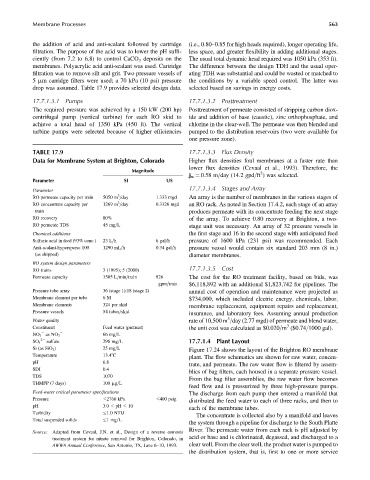
            TABLE 17.9                                         17.7.1.3.3  Flux Density
            Data for Membrane System at Brighton, Colorado     Higher flux densities foul membranes at a faster rate than
                                                               lower flux densities (Cevaal et al., 1993). Therefore, the
                                            Magnitude                                  2
                                                               j w ¼ 0.58 m=day (14.2 gpd=ft ) was selected.
            Parameter                     SI            US
                                                               17.7.1.3.4  Stages and Array
            Parameter
                                        3
            RO permeate capacity per train  5050 m =day  1.333 mgd  An array is the number of membranes in the various stages of
                                        3
            RO concentrate capacity per  1269 m =day  0.3326 mgd  an RO rack. As noted in Section 17.4.2, each stage of an array
             train                                             produces permeate with its concentrate feeding the next stage
            RO recovery            80%                         of the array. To achieve 0.80 recovery at Brighton, a two-
            RO permeate TDS        45 mg=L                     stage unit was necessary. An array of 32 pressure vessels in
            Chemical additions                                 the first stage and 16 in the second stage with anticipated feed
            Sulfuric acid in feed (93% conc.)  23 L=h  6 gal=h  pressure of 1600 kPa (231 psi) was recommended. Each
            Anti-scalant-hypersperse 100  1290 mL=h  0.34 gal=h  pressure vessel would contain six standard 203 mm (8 in.)
             (as shipped)                                      diameter membranes.
            RO system design parameters
                                                               17.7.1.3.5  Cost
            RO trains              3 (1995); 5 (2000)
            Permeate capacity      3505 L=min=train  926       The cost for the RO treatment facility, based on bids, was
                                                     gpm=train  $6,118,892 with an additional $1,823,742 for pipelines. The
            Pressure tube array    36 (stage 1):18 (stage 2)   annual cost of operation and maintenance were projected as
            Membrane element per tube  6 M                     $734,000, which included electric energy, chemicals, labor,
            Membrane elements      324 per skid                membrane replacement, equipment repairs and replacement,
            Pressure vessels       54 tubes=skid               insurance, and laboratory fees. Assuming annual production
                                                                            3
            Water quality                                      rate of 10,500 m =day (2.77 mgd) of permeate and blend water,
                                                                                               3
            Constituent            Feed water (pretreat)       the unit cost was calculated as $0.020=m ($0.74=1000 gal).
                                   66 mg=L
            NO 3 as NO 3
              2   sulfate          296 mg=L                    17.7.1.4  Plant Layout
            SO 4
            Si (as SiO 2 )         25 mg=L                     Figure 17.24 shows the layout of the Brighton RO membrane
            Temperature            13.48C
                                                               plant. The flow schematics are shown for raw water, concen-
            pH                     6.8
                                                               trate, and permeate. The raw water flow is filtered by assem-
            SDI                    0.4
                                                               blies of bag filters, each housed in a separate pressure vessel.
            TDS                    1070
                                                               From the bag filter assemblies, the raw water flow becomes
            THMFP (7 days)         100 mg=L
                                                               feed flow and is pressurized by three high-pressure pumps.
            Feed-water critical parameter specifications
                                                               The discharge from each pump then entered a manifold that
            Pressure                2760 kPa         400 psig
                                                               distributed the feed water to each of three racks, and then to
            pH                     3.0   pH   10
                                                               each of the membrane tubes.
            Turbidity               1.0 NTIJ
                                                                  The concentrate is collected also by a manifold and leaves
            Total suspended solids   1mg=L
                                                               the system through a pipeline for discharge to the South Platte
                                                               River. The permeate water from each rack is pH adjusted by
            Source: Adapted from Cevaal, J.N. et al., Design of a reverse osmosis
                  treatment system for nitrate removal for Brighton, Colorado, in  acid or base and is chlorinated, degassed, and discharged to a
                  AWWA Annual Conference, San Antonio, TX, June 6–10, 1993.  clear well. From the clear well, the product water is pumped to
                                                               the distribution system, that is, first to one or more service

