


Page 300 - gas transport in porous media
P. 300
Rossabi
                           298


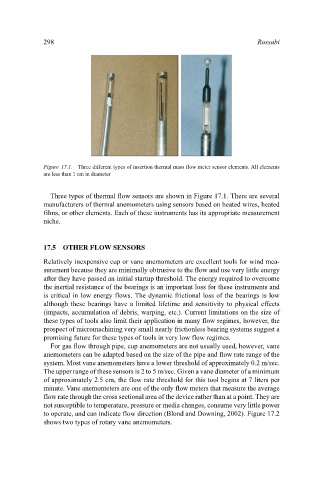
                           Figure 17.1. Three different types of insertion thermal mass flow meter sensor elements. All elements
                           are less than 1 cm in diameter


                             Three types of thermal flow sensors are shown in Figure 17.1. There are several
                           manufacturers of thermal anemometers using sensors based on heated wires, heated
                           films, or other elements. Each of these instruments has its appropriate measurement
                           niche.


                           17.5  OTHER FLOW SENSORS
                           Relatively inexpensive cup or vane anemometers are excellent tools for wind mea-
                           surement because they are minimally obtrusive to the flow and use very little energy
                           after they have passed an initial startup threshold. The energy required to overcome
                           the inertial resistance of the bearings is an important loss for these instruments and
                           is critical in low energy flows. The dynamic frictional loss of the bearings is low
                           although these bearings have a limited lifetime and sensitivity to physical effects
                           (impacts, accumulation of debris, warping, etc.). Current limitations on the size of
                           these types of tools also limit their application in many flow regimes, however, the
                           prospect of micromachining very small nearly frictionless bearing systems suggest a
                           promising future for these types of tools in very low flow regimes.
                             For gas flow through pipe, cup anemometers are not usually used, however, vane
                           anemometers can be adapted based on the size of the pipe and flow rate range of the
                           system. Most vane anemometers have a lower threshold of approximately 0.2 m/sec.
                           The upper range of these sensors is 2 to 5 m/sec. Given a vane diameter of a minimum
                           of approximately 2.5 cm, the flow rate threshold for this tool begins at 7 liters per
                           minute. Vane anemometers are one of the only flow meters that measure the average
                           flow rate through the cross sectional area of the device rather than at a point. They are
                           not susceptible to temperature, pressure or media changes, consume very little power
                           to operate, and can indicate flow direction (Blond and Downing, 2002). Figure 17.2
                           shows two types of rotary vane anemometers.

