


Page 165 - Geochemical Remote Sensing of The Sub-Surface
P. 165
142                                     V.T. Jones, M.D.  Matthews and D.M.  Richers

                                                ,,,,,
                         Geochemical  Methods  of
                         Prospecting  and Exploration
                                    I
                     I                                   I
                  [  Direct  t                     !  I Indi,ootl
                      I                                  !         I
                                          i
                                                   :i_1
                                              ,
                                        H;drochemical I  Soil-Salt J  Microbiological !
             --~Free soil 'gases .]  ~  Fluorescence ]
                                         ~  Marine survey]      method
                              Surface core [
             -~ Gas logging  ]   Deep cores  I   U w to, wo.  -q.o no  I
                                         I  seismic shot holes  __~ Chloride ]
                oroox --. I   woH,og g 1   Formation brines [   [-Gypsum I


                                             ....
                                          -~  Water classification i

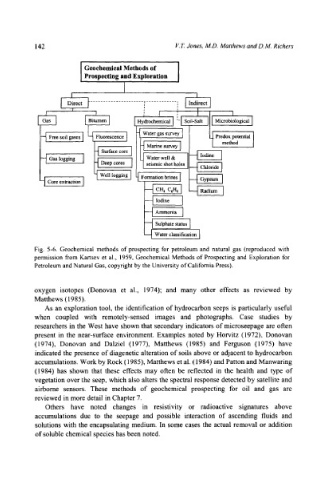
           Fig. 5-6. Geochemical  methods  of prospecting  for petroleum  and  natural  gas  (reproduced  with
           permission  from Kartsev et ai., 1959, Geochemical  Methods of Prospecting  and  Exploration  for
           Petroleum and Natural Gas, copyright by the University of California Press).


           oxygen  isotopes  (Donovan  et  al.,  1974);  and  many  other  effects  as  reviewed  by
           Matthews (1985).
              As  an  exploration  tool,  the  identification  of hydrocarbon  seeps  is particularly  useful
           when  coupled  with  remotely-sensed  images  and  photographs.  Case  studies  by
           researchers  in the  West  have  shown  that  secondary indicators  of microseepage  are  often
           present  in  the  near-surface  environment.  Examples  noted  by  Horvitz  (1972),  Donovan
           (1974),  Donovan  and  Dalziel  (1977),  Matthews  (1985)  and  Ferguson  (1975)  have
           indicated  the presence  of diagenetic  alteration  of soils above  or adjacent  to  hydrocarbon
           accumulations.  Work by Rock (1985),  Matthews et al. (1984)  and Patton and Manwaring
           (1984)  has  shown  that  these  effects  may  often  be  reflected  in  the  health  and  type  of
           vegetation over the seep,  which  also alters the  spectral  response  detected  by satellite  and
           airborne  sensors.  These  methods  of  geochemical  prospecting  for  oil  and  gas  are
           reviewed  in more detail  in Chapter 7.
              Others  have  noted  changes  in  resistivity  or  radioactive  signatures  above
           accumulations  due  to  the  seepage  and  possible  interaction  of  ascending  fluids  and
           solutions  with  the  encapsulating  medium.  In  some  cases  the  actual  removal  or  addition
           of soluble chemical species has been noted.

