


Page 351 - Intelligent Digital Oil And Gas Fields
P. 351
294                                       Intelligent Digital Oil and Gas Fields


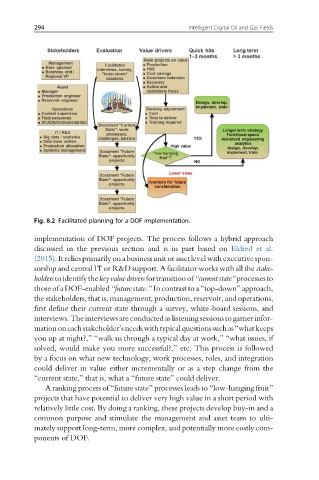
          Fig. 8.2 Facilitated planning for a DOF implementation.

          implementation of DOF projects. The process follows a hybrid approach
          discussed in the previous section and is in part based on Eldred et al.
          (2015). It relies primarily on a business unit or asset level with executive spon-
          sorship and central IT or R&D support. A facilitator works with all the stake-
          holderstoidentifythekeyvaluedriversfortransitionof“currentstate”processesto
          those of a DOF-enabled “future state.” In contrast to a “top-down” approach,
          the stakeholders, that is, management, production, reservoir, and operations,
          first define their current state through a survey, white-board sessions, and
          interviews. The interviews are conducted as listening sessions to garner infor-
          mationoneachstakeholder’sneedswithtypicalquestionssuchas“whatkeeps
          you up at night?,” “walk us through a typical day at work,” “what issues, if
          solved, would make you more successful?,” etc. This process is followed
          by a focus on what new technology, work processes, roles, and integration
          could deliver in value either incrementally or as a step change from the
          “current state,” that is, what a “future state” could deliver.
             A ranking process of “future state” processes leads to “low-hanging fruit”
          projects that have potential to deliver very high value in a short period with
          relatively little cost. By doing a ranking, these projects develop buy-in and a
          common purpose and stimulate the management and asset team to ulti-
          mately support long-term, more complex, and potentially more costly com-
          ponents of DOF.

