


Page 352 - Intelligent Digital Oil And Gas Fields
P. 352
Transitioning to Effective DOF Enabled by Collaboration and Management of Change  295


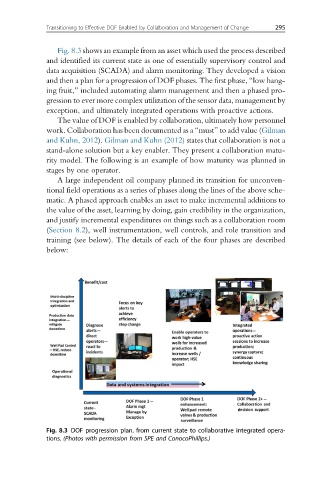
                 Fig. 8.3 shows an example from an asset which used the process described
              and identified its current state as one of essentially supervisory control and
              data acquisition (SCADA) and alarm monitoring. They developed a vision
              and then a plan for a progression of DOF phases. The first phase, “low hang-
              ing fruit,” included automating alarm management and then a phased pro-
              gression to ever more complex utilization of the sensor data, management by
              exception, and ultimately integrated operations with proactive actions.
                 The value of DOF is enabled by collaboration, ultimately how personnel
              work. Collaboration has been documented as a “must” to add value (Gilman
              and Kuhn, 2012). Gilman and Kuhn (2012) states that collaboration is not a
              stand-alone solution but a key enabler. They present a collaboration matu-
              rity model. The following is an example of how maturity was planned in
              stages by one operator.
                 A large independent oil company planned its transition for unconven-
              tional field operations as a series of phases along the lines of the above sche-
              matic. A phased approach enables an asset to make incremental additions to
              the value of the asset, learning by doing, gain credibility in the organization,
              and justify incremental expenditures on things such as a collaboration room
              (Section 8.2), well instrumentation, well controls, and role transition and
              training (see below). The details of each of the four phases are described
              below:


              Fig. 8.3 DOF progression plan, from current state to collaborative integrated opera-
              tions. (Photos with permission from SPE and ConocoPhillips.)

