


Page 167 - Modular design for machine tools
P. 167
Description of Machine  Tools    127


                 1st figure   2d figure    3d figure   4th figure   5th figure

                             Fundamental   Shape of
                               shape      main cross
                                           section

               Inflow surface    Shape of structural   Function of  Outflow surface
                of the force         module            structural  of the force
                                                        module
                                             (a)

                                         2   3    4

                       Extended 1st figure              Extended 5th figure

                                             (b)
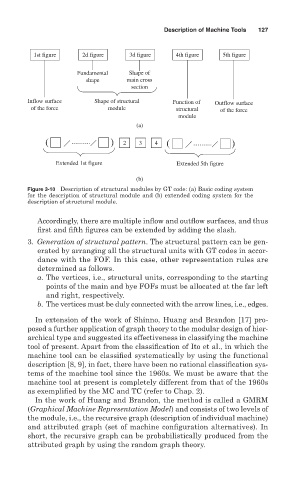
               Figure 3-10    Description of structural modules by GT code: (a) Basic coding system
               for the description of structural module and (b) extended coding system for the
               description of structural module.

                  Accordingly, there are multiple inflow and outflow surfaces, and thus
                  first and fifth figures can be extended by adding the slash.
               3. Generation of structural pattern. The structural pattern can be gen-
                  erated by arranging all the structural units with GT codes in accor-
                  dance with the FOF. In this case, other representation rules are
                  determined as follows.
                  a. The vertices, i.e., structural units, corresponding to the starting
                    points of the main and bye FOFs must be allocated at the far left
                    and right, respectively.
                  b. The vertices must be duly connected with the arrow lines, i.e., edges.
                 In extension of the work of Shinno, Huang and Brandon [17] pro-
               posed a further application of graph theory to the modular design of hier-
               archical type and suggested its effectiveness in classifying the machine
               tool of present. Apart from the classification of Ito et al., in which the
               machine tool can be classified systematically by using the functional
               description [8, 9], in fact, there have been no rational classification sys-
               tems of the machine tool since the 1960s. We must be aware that the
               machine tool at present is completely different from that of the 1960s
               as exemplified by the MC and TC (refer to Chap. 2).
                 In the work of Huang and Brandon, the method is called a GMRM
               (Graphical Machine Representation Model) and consists of two levels of
               the module, i.e., the recursive graph (description of individual machine)
               and attributed graph (set of machine configuration alternatives). In
               short, the recursive graph can be probabilistically produced from the
               attributed graph by using the random graph theory.

