


Page 101 - Physical chemistry eng
P. 101
78     CHAPTER 4 Thermochemistry

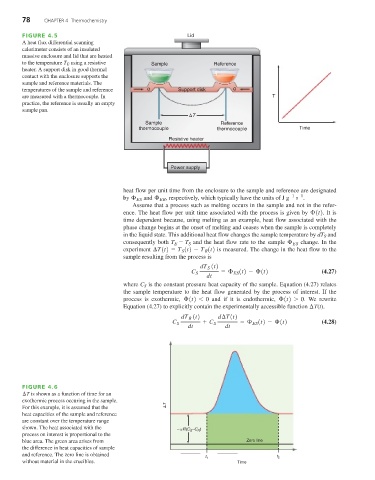
        FIGURE 4.5                                            Lid
        A heat flux differential scanning
        calorimeter consists of an insulated
        massive enclosure and lid that are heated
        to the temperature T E using a resistive  Sample               Reference
        heater. A support disk in good thermal
        contact with the enclosure supports the
        sample and reference materials. The
        temperatures of the sample and reference  q        Support disk      q
        are measured with a thermocouple. In                                              T
        practice, the reference is usually an empty
        sample pan.
                                                                T
                                                Sample                   Reference
                                              thermocouple              thermocouple               Time
                                                        Resistive heater


                                                         Power supply


                                         heat flow per unit time from the enclosure to the sample and reference are designated
                                         by £ ES  and £ ER , respectively, which typically have the units of J g -1 -1
                                                                                                  s .
                                            Assume that a process such as melting occurs in the sample and not in the refer-
                                         ence. The heat flow per unit time associated with the process is given by  £(t) . It is
                                         time dependent because, using melting as an example, heat flow associated with the
                                         phase change begins at the onset of melting and ceases when the sample is completely
                                         in the liquid state. This additional heat flow changes the sample temperature by dT and
                                                                                                           S
                                         consequently both T - T and the heat flow rate to the sample  £ ES  change. In the
                                                               S
                                                          E
                                         experiment ¢T(t) = T (t) - T (t)  is measured. The change in the heat flow to the
                                                            S
                                                                    R
                                         sample resulting from the process is
                                                                  dT (t)
                                                                     S
                                                               C         =£ (t) -£(t)                     (4.27)
                                                                             ES
                                                                 S
                                                                    dt
                                         where C is the constant pressure heat capacity of the sample. Equation (4.27) relates
                                                S
                                         the sample temperature to the heat flow generated by the process of interest. If the
                                         process is exothermic,  £(t) 6 0  and if it is endothermic,  £(t) 7 0 . We rewrite
                                                                                                      ¢
                                         Equation (4.27) to explicitly contain the experimentally accessible function  T(t).
                                                                (t)     d¢T(t)
                                                            dT R
                                                         C         + C         =£ (t) -£(t)               (4.28)
                                                                                   ES
                                                                       S
                                                           S
                                                              dt          dt


        FIGURE 4.6
        ¢ T is shown as a function of time for an
        exothermic process occuring in the sample.
        For this example, it is assumed that the        T
        heat capacities of the sample and reference
        are constant over the temperature range
        shown. The heat associated with the                  R(C S –C R )
        process on interest is proportional to the
        blue area. The green area arises from                                    Zero line
        the difference in heat capacities of sample
        and reference. The zero line is obtained
                                                                    t 1                    t 2
        without material in the crucibles.                                    Time

