


Page 390 - Planning and Design of Airports
P. 390
Airport Lighting, Marking, and Signage     341


                                                N


                                                  NOTE: DUE TO SPACE LIMITATIONS
                                G27-9
                             G  G  G H  H  H  H27-9  ON THIS DRAWING, SOME SIGNS MAY
                                                  NOT BE IN THEIR EXACT LOCATION
                        6                   6   H  RELATIVE TO THE RUNWAY OR TAXIWAY.
                        H
                   6
                   B      C           C     E               D
                                                   D
            B 9
                                               D 9-27
                             G
                                H-27
                            GH-27                         E
            ILS                 C    INTL              E 9-27     B E F   B
            ILS  ILS CRITICAL
                   AREA      B   C    C   B          BD  B  INTL  H F
                         B                   B
                                     B    C               F    B
                            C   B  INTL         INTL          INTL   F B  INTL
                NOT TO SCALE    C      TAXIWAY HOLD LINE MARKINGS  F
                                       TO BE INSTALLED ONLY WHERE  INTL
                                       THERE IS AN OPERATIONAL NEED
                               G       (SEE AC 150/5340–1)   F
                                     C                    F        F
                            C
                              APRON                          APRON
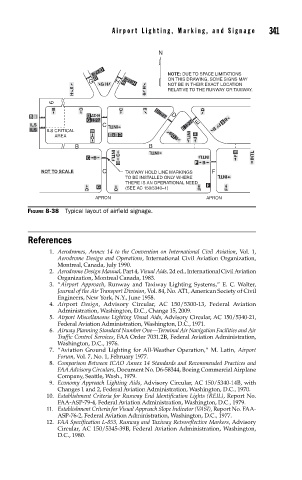
            FIGURE 8-38  Typical layout of airfi eld signage.
            References
                  1.  Aerodromes, Annex 14 to the Convention on International Civil Aviation, Vol. 1,
                    Aerodrome Design and Operations, International Civil Aviation Organization,
                    Montreal, Canada, July 1990.
                  2.  Aerodrome Design Manual, Part 4, Visual Aids, 2d ed., International Civil Aviation
                    Organization, Montreal Canada, 1983.
                  3.  “Airport Approach, Runway and Taxiway Lighting Systems,” E. C. Walter,
                    Journal of the Air Transport Division, Vol. 84, No. AT1, American Society of Civil
                    Engineers, New York, N.Y., June 1958.
                  4.  Airport Design, Advisory  Circular, AC  150/5300-13,  Federal Aviation
                    Administration, Washington, D.C., Change 15, 2009.
                  5.  Airport Miscellaneous Lighting Visual Aids, Advisory Circular, AC 150/5340-21,
                    Federal Aviation Administration, Washington, D.C., 1971.
                  6.  Airway Planning Standard Number One—Terminal Air Navigation Facilities and Air
                    Traffic Control Services, FAA Order 7031.2B, Federal Aviation Administration,
                    Washington, D.C., 1976.
                   7.  “Aviation Ground Lighting for All-Weather Operation,” M. Latin,  Airport
                    Forum, Vol. 7, No. 1, February 1977.
                  8.  Comparison Between ICAO Annex 14 Standards and Recommended Practices and
                    FAA Advisory Circulars, Document No. D6-58344, Boeing Commercial Airplane
                    Company, Seattle, Wash., 1979.
                  9.  Economy Approach Lighting Aids, Advisory Circular, AC 150/5340-14B, with
                    Changes 1 and 2, Federal Aviation Administration, Washington, D.C., 1970.
                 10. Establishment Criteria for Runway End Identification Lights (REIL), Report No.
                    FAA-ASP-79-4, Federal Aviation Administration, Washington, D.C., 1979.
                 11.  Establishment Criteria for Visual Approach Slope Indicator (VASI), Report No. FAA-
                    ASP-76-2, Federal Aviation Administration, Washington, D.C., 1977.
                 12. FAA Specification L-853, Runway and Taxiway Retroreflective Markers, Advisory
                    Circular, AC 150/5345-39B, Federal Aviation Administration, Washington,
                    D.C., 1980.

