


Page 336 - Radar Technology Encyclopedia
P. 336
radar, airport surveillance (ASR)                                radar, air-route-surveillance (ARSR)  326


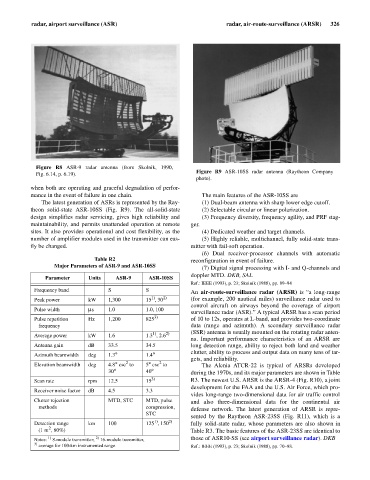
             Figure R8  ASR-9 radar  antenna (from Skolnik, 1990,
                                                                  Figure R9  ASR-10SS radar  antenna (Raytheon Company
             Fig. 6.14, p. 6.19).
                                                                  photo).
           when both are operating and graceful degradation of perfor-
           mance in the event of failure in one chain.              The main features of the ASR-10SS are
               The latest generation of ASRs is represented by the Ray-  (1) Dual-beam antenna with sharp lower edge cutoff.
           theon solid-state ASR-10SS (Fig.  R9). The all-solid-state  (2) Selectable circular or linear polarization.
           design simplifies radar servicing,  gives  high reliability  and  (3) Frequency diversity, frequency agility, and PRF stag-
           maintainability, and permits unattended operation at remote  ger.
           sites. It also provides operational and cost flexibility, as the  (4) Dedicated weather and target channels.
           number of amplifier modules used in the transmitter can eas-  (5) Highly reliable, multichannel, fully solid-state trans-
           ily be changed.                                      mitter with fail-soft operation.
                                                                    (6) Dual receiver-processor channels with  automatic
                                Table R2                        reconfiguration in event of failure.
                   Major Parameters of ASR-9 and ASR-10SS
                                                                    (7) Digital signal processing with I- and Q-channels and
                                                                doppler MTD. DKB, SAL
                Parameter     Units    ASR-9      ASR-10SS
                                                                Ref.: IEEE (1993), p. 23; Skolnik (1988), pp. 89–94
            Frequency band           S           S
                                                                An  air-route-surveillance radar (ARSR)  is “a long-range
                                                   1)
            Peak power        kW     1,300       15 , 30 2)     (for example, 200 nautical miles) surveillance radar used to
                                                                control aircraft on airways beyond  the coverage of airport
            Pulse width       m s    1.0         1.0, 100
                                                                surveillance radar (ASR).” A typical ARSR has a scan period
            Pulse repetition   Hz    1,200       825 3)         of 10 to 12s, operates at L-band, and provides two-coordinate
              frequency                                         data (range and azimuth). A secondary surveillance radar
                                                                (SSR) antenna is usually mounted on the rotating radar anten-
                                                   1)
                                                        2)
            Average power     kW     1.6         1.3 , 2.6
                                                                na. Important performance characteristics of  an  ARSR are
            Antenna gain      dB     33.5        34.5           long detection range, ability to reject both land and weather
                                                                clutter, ability to process and output data on many tens of tar-
            Azimuth beamwidth  deg   1.3°        1.4°
                                                                gets, and reliability.
                                           2
                                                      2
            Elevation beamwidth  deg  4.8°  csc  to   5°  csc  to   The Alenia  ATCR-22 is typical of ARSRs  developed
                                     30°         40°            during the 1970s, and its major parameters are shown in Table
            Scan rate         rpm    12.5        15 3)          R3. The newest U.S. ARSR is the ARSR-4 (Fig. R10), a joint
                                                                development for the FAA and the U.S. Air Force, which pro-
            Receiver noise factor  dB  4.5       3.3
                                                                vides long-range two-dimensional data for air traffic control
            Clutter rejection        MTD, STC    MTD, pulse     and also three-dimensional data for the continental air
              methods                            compression,
                                                                defense  network. The latest generation of ARSR is repre-
                                                 STC
                                                                sented by the  Raytheon  ASR-23SS (Fig. R11),  which is a
                                                    1)
            Detection range   km     100         125 , 150 2)   fully solid-state radar, whose parameters are also shown in
                 2
              (1 m , 80%)                                       Table R3. The basic features of the ASR-23SS are identical to
                                 2)
                 1)
            Notes:   8-module transmitter;   16-module transmitter,  those of ASR10-SS (see airport surveillance radar). DKB
            3)  average for 100-km instrumented range           Ref.: IEEE (1993), p. 23; Skolnik (1988), pp. 70–88.

