


Page 333 - Radar Technology Encyclopedia
P. 333
323   radar, airborne-early-warning (AEW)                                       radar, airborne mapping


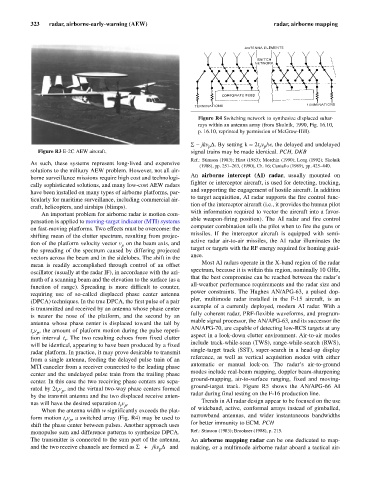
                                                                  Figure R4 Switching network to synthesize displaced subar-
                                                                  rays within an antenna array (from Skolnik, 1990, Fig. 16.10,
                                                                  p. 16.10, reprinted by permission of McGraw-Hill).
                                                                    jk
                                                                     v
                                                                S -  D. By setting k » 2t v /w, the delayed and undelayed
                                                                      p                r p
              Figure R3 E-2C AEW aircraft.                      signal trains may be made identical. PCH, DKB
                                                                Ref.: Stimson (1983); Hirst (1983); Morchin (1990); Long (1992); Skolnik
           As such, these systems  represent long-lived  and expensive
                                                                   (1988), pp. 251–263, (1990), Ch. 16; Cantafio (1989), pp. 425–440.
           solutions to the military AEW problem. However, not all air-
                                                                An  airborne intercept (AI)  radar, usually mounted on
           borne surveillance missions require high cost and technologi-
                                                                fighter or interceptor aircraft, is used for detecting, tracking,
           cally sophisticated solutions, and many low-cost AEW radars
                                                                and supporting the engagement of hostile aircraft. In addition
           have been installed on many types of airborne platforms, par-
                                                                to target acquisition, AI radar supports the fire control func-
           ticularly for maritime surveillance, including commercial air-
                                                                tion of the interceptor aircraft (i.e., it provides the human pilot
           craft, helicopters, and airships (blimps).
                                                                with information required to vector the aircraft into a favor-
               An important problem for airborne radar is motion com-
                                                                able weapon-firing  position). The  AI radar  and fire  control
           pensation is applied to moving-target indicator (MTI) systems
                                                                computer combination tells the pilot when to fire the guns or
           on fast-moving platforms. Two effects must be overcome: the
                                                                missiles.  If  the interceptor aircraft is equipped  with semi-
           shifting mean of the clutter spectrum, resulting from projec-
                                                                active radar air-to-air missiles, the AI radar illuminates the
           tion of the platform velocity vector v  on the beam axis, and
                                         p
           the spreading of the spectrum caused by differing projected  target or targets with the RF energy required for homing guid-
                                                                ance.
           vectors across the beam and in the sidelobes. The shift in the
                                                                    Most AI radars operate in the X-band region of the radar
           mean is readily  accomplished through  control of  an  offset
                                                                spectrum, because it is within this region, nominally 10 GHz,
           oscillator (usually at the radar IF), in accordance with the azi-
                                                                that the best compromise can be reached between the radar’s
           muth of a scanning beam and the elevation to the surface (as a
                                                                all-weather performance requirements and the radar size and
           function  of  range).  Spreading is more difficult to counter,
                                                                power constraints. The Hughes AN/APG-63, a pulsed dop-
           requiring  use of so-called displaced phase center  antenna
                                                                pler, multimode radar installed in  the F-15 aircraft, is an
           (DPCA) techniques. In the true DPCA, the first pulse of a pair
                                                                example  of  a currently deployed, modern AI  radar.  With a
           is transmitted and received by an antenna whose phase center
                                                                fully coherent radar, PRF-flexible waveforms, and program-
           is nearer the nose of the platform, and the second by an
                                                                mable signal processor, the AN/APG-63, and its successor the
           antenna whose phase center is displaced toward the tail by
                                                                AN/APG-70, are capable of detecting low-RCS targets at any
           t v , the amount of platform motion during the pulse repeti-
            r p
           tion interval t . The two resulting echoes from fixed clutter  aspect in a look-down clutter environment. Air-to-air modes
                      r
           will be identical, appearing to have been produced by a fixed  include track-while-scan (TWS), range-while-search (RWS),
                                                                single-target track (SST), super-search in a head-up display
           radar platform. In practice, it may prove desirable to transmit
                                                                reference, as well as vertical acquisition modes with either
           from a single antenna, feeding the delayed pulse train of an
                                                                automatic  or manual lock-on. The radar’s air-to-ground
           MTI canceler from a receiver connected to the leading phase
                                                                modes include real-beam mapping, doppler beam-sharpening
           center and the undelayed pulse train from the trailing phase
                                                                ground-mapping, air-to-surface ranging, fixed and moving-
           center. In this case the two receiving phase centers are sepa-
                                                                ground-target track. Figure R5 shows the AN/APG-66 AI
           rated by 2t v , and the virtual two-way phase centers formed
                    r p
           by the transmit antenna and the two displaced receive anten-  radar during final testing on the F-16 production line.
                                                                    Trends in AI radar design appear to be focused on the use
           nas will have the desired separation t v .
                                         r p
               When the antenna width w significantly exceeds the plat-  of wideband, active, conformal arrays instead of gimballed,
                                                                narrowband antennas, and wider  instantaneous bandwidths
           form motion t v , a switched array (Fig. R4) may be used to
                      r p
           shift the phase center between pulses. Another approach uses  for better immunity to ECM. PCH
           monopulse sum and difference patterns to synthesize DPCA.  Ref.: Stimson (1983); Brookner (1988), p. 215.
           The transmitter is connected to the sum port of the antenna,  An airborne mapping radar can be one dedicated to map-
           and the two receive channels are formed as S + jkv D  and   making, or a multimode airborne radar aboard a tactical air-
                                                      p

