


Page 166 - Sedimentology and Stratigraphy
P. 166
Freshwater Lakes    153


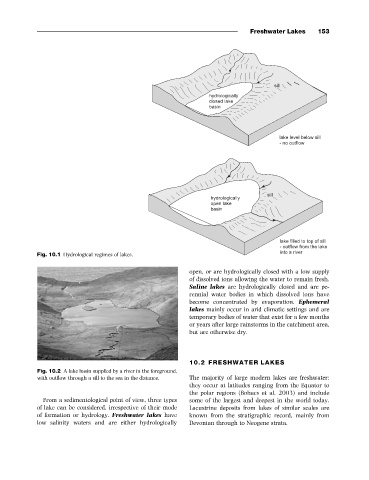
                 Fig. 10.1 Hydrological regimes of lakes.
                                                              open, or are hydrologically closed with a low supply
                                                              of dissolved ions allowing the water to remain fresh.
                                                              Saline lakes are hydrologically closed and are pe-
                                                              rennial water bodies in which dissolved ions have
                                                              become concentrated by evaporation. Ephemeral
                                                              lakes mainly occur in arid climatic settings and are
                                                              temporary bodies of water that exist for a few months
                                                              or years after large rainstorms in the catchment area,
                                                              but are otherwise dry.


                                                              10.2 FRESHWATER LAKES
                 Fig. 10.2 A lake basin supplied by a river in the foreground,
                 with outflow through a sill to the sea in the distance.  The majority of large modern lakes are freshwater:
                                                              they occur at latitudes ranging from the Equator to
                                                              the polar regions (Bohacs et al. 2003) and include
                   From a sedimentological point of view, three types  some of the largest and deepest in the world today.
                 of lake can be considered, irrespective of their mode  Lacustrine deposits from lakes of similar scales are
                 of formation or hydrology. Freshwater lakes have  known from the stratigraphic record, mainly from
                 low salinity waters and are either hydrologically  Devonian through to Neogene strata.

