


Page 171 - Sedimentology and Stratigraphy
P. 171
158    Lakes


                                                                                        $


	          -                              *  +
                               "#
                          $ % &  "    ' #                   % . /0$ 0 %                 #
                                             % &
                                                                                       ,

      $


	      -                                  *  +

                               (( #                    % . /0$ 0 %
/ /
                          $ % &  ))    ' #      % &                 *  0  % . /12$ 0 %  ,


                           3    4                   $


	                                        *  +

                                (( #
/ /
                          $ % &  ((    ' #      % &         * $ % & /*  % & /0$ 0 %     ,


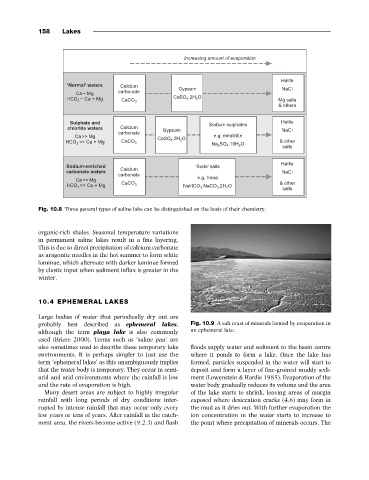
                  Fig. 10.8 Three general types of saline lake can be distinguished on the basis of their chemistry.


                  organic-rich shales. Seasonal temperature variations
                  in permanent saline lakes result in a fine layering.
                  This is due to direct precipitation of calcium carbonate
                  as aragonite needles in the hot summer to form white
                  laminae, which alternate with darker laminae formed
                  by clastic input when sediment influx is greater in the
                  winter.


                  10.4 EPHEMERAL LAKES

                  Large bodies of water that periodically dry out are
                  probably  best  described  as  ephemeral  lakes,  Fig. 10.9 A salt crust of minerals formed by evaporation in
                  although the term playa lake is also commonly  an ephemeral lake.
                  used (Briere 2000). Terms such as ‘saline pan’ are
                  also sometimes used to describe these temporary lake  floods supply water and sediment to the basin centre
                  environments. It is perhaps simpler to just use the  where it ponds to form a lake. Once the lake has
                  term ‘ephemeral lakes’ as this unambiguously implies  formed, particles suspended in the water will start to
                  that the water body is temporary. They occur in semi-  deposit and form a layer of fine-grained muddy sedi-
                  arid and arid environments where the rainfall is low  ment (Lowenstein & Hardie 1985). Evaporation of the
                  and the rate of evaporation is high.        water body gradually reduces its volume and the area
                    Many desert areas are subject to highly irregular  of the lake starts to shrink, leaving areas of margin
                  rainfall with long periods of dry conditions inter-  exposed where desiccation cracks (4.6) may form in
                  rupted by intense rainfall that may occur only every  the mud as it dries out. With further evaporation the
                  few years or tens of years. After rainfall in the catch-  ion concentration in the water starts to increase to
                  ment area, the rivers become active (9.2.3) and flash  the point where precipitation of minerals occurs. The

