


Page 180 - Sedimentology and Stratigraphy
P. 180
Tides    167


                                                              between the low and high tide, and the ebb tide
                                    	    	                    current, which flows in the opposite direction as the
                                  $&
%               water level returns to low tide. These are bipolar
                                                              currents acting in two opposite directions. Second,


             the tidal flow varies in velocity in a cyclical manner.

           	     At times of high and low tide, the water is still, but as

   	                       the tide turns, the water starts to move and increases
                                  $ "                         in velocity up to a peak at the mid-tide point in each

%                      direction. Third, the strength of the flow is directly
                                                              related to the difference between the levels of the high
                                                              and low tides. As the tidal range varies according to
                                                              the series of cycles (see above) the velocity of the
                                                              current varies in the same pattern. The strongest
                                                              tidal currents occur when there are the highest spring
                                                              tides at the spring and autumn equinoxes.
                                                  	            The rotational pattern of the tidal wave within
                                           $'
%      amphidromic cells results in a flow of water that
                                                              follows a circular or elliptical pattern. These rotary
                                     ' (
              tides can be important currents on shelves and in
                                                              epicontinental seas. During the course of the tidal
                                                              cycle the current varies in strength, but does not
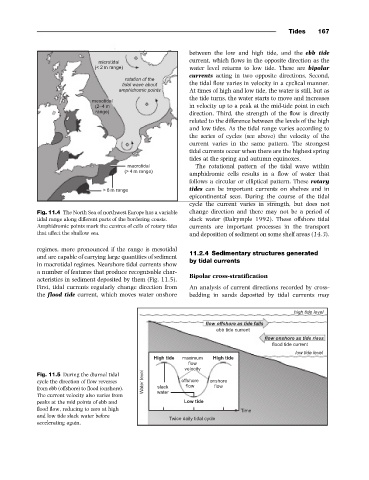
                 Fig. 11.4 The North Sea of northwest Europe has a variable  change direction and there may not be a period of
                 tidal range along different parts of the bordering coasts.  slack water (Dalrymple 1992). These offshore tidal
                 Amphidromic points mark the centres of cells of rotary tides  currents are important processes in the transport
                 that affect the shallow sea.                 and deposition of sediment on some shelf areas (14.3).

                 regimes, more pronounced if the range is mesotidal
                                                              11.2.4 Sedimentary structures generated
                 and are capable of carrying large quantities of sediment
                                                              by tidal currents
                 in macrotidal regimes. Nearshore tidal currents show
                 a number of features that produce recognisable char-
                                                              Bipolar cross-stratification
                 acteristics in sediment deposited by them (Fig. 11.5).
                 First, tidal currents regularly change direction from  An analysis of current directions recorded by cross-
                 the flood tide current, which moves water onshore  bedding in sands deposited by tidal currents may


        ,

  *

                 Fig. 11.5 During the diurnal tidal
                 cycle the direction of flow reverses  +

                 from ebb (offshore) to flood (onshore).  *

  *
  *
                 The current velocity also varies from
                 peaks at the mid points of ebb and
                 flood flow, reducing to zero at high                        )
                 and low tide slack water before        )*
                 accelerating again.

