


Page 395 - Six Sigma Demystified
P. 395
Part 3  S i x   S i g m a  To o l S        375


                             •  It is best to only work with data that are collected specifically for the
                                analysis. Other so-called happenstance data may include data that are
                                mixed over several populations. These separate populations may indi-
                                cate a hidden variable or interaction that is difficult to detect after the
                                fact.


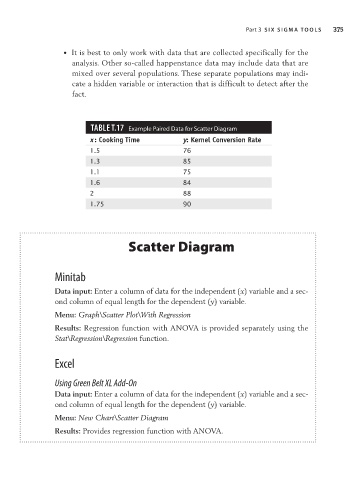
                                     TAbLe T.17  Example Paired Data for Scatter Diagram
                                     x : Cooking Time          y: Kernel Conversion Rate
                                     1.5                       76
                                     1.3                       85
                                     1.1                       75
                                     1.6                       84
                                     2                         88
                                     1.75                      90


                                               Scatter Diagram


                           Minitab

                           Data input: Enter a column of data for the independent (x) variable and a sec-
                           ond column of equal length for the dependent (y) variable.
                           Menu: Graph\Scatter Plot\With Regression

                           Results: Regression function with ANOVA is provided separately using the
                           Stat\Regression\Regression function.

                           Excel


                           Using Green Belt XL Add-On
                           Data input: Enter a column of data for the independent (x) variable and a sec-
                           ond column of equal length for the dependent (y) variable.
                           Menu: New Chart\Scatter Diagram

                           Results: Provides regression function with ANOVA.

