


Page 262 - Statistics II for Dummies
P. 262
246        Part IV: Building Strong Connections with Chi-Square Tests


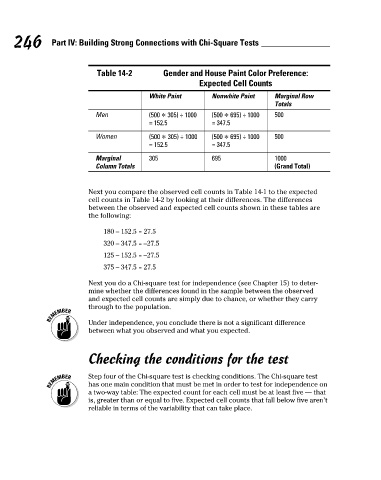
                                   Table 14-2        Gender and House Paint Color Preference:
                                                               Expected Cell Counts
                                                 White Paint       Nonwhite Paint   Marginal Row
                                                                                    Totals
                                  Men            (500 * 305) ÷ 1000   (500 * 695) ÷ 1000   500
                                                 = 152.5           = 347.5
                                  Women          (500 * 305) ÷ 1000   (500 * 695) ÷ 1000   500
                                                 = 152.5           = 347.5

                                  Marginal       305               695              1000
                                  Column Totals                                     (Grand Total)


                                Next you compare the observed cell counts in Table 14-1 to the expected
                                cell counts in Table 14-2 by looking at their differences. The differences
                                between the observed and expected cell counts shown in these tables are
                                the following:

                                    180 – 152.5 = 27.5
                                    320 – 347.5 = –27.5
                                    125 – 152.5 = –27.5
                                    375 – 347.5 = 27.5
                                Next you do a Chi-square test for independence (see Chapter 15) to deter-
                                mine whether the differences found in the sample between the observed
                                and expected cell counts are simply due to chance, or whether they carry
                                through to the population.
                                Under independence, you conclude there is not a significant difference
                                between what you observed and what you expected.


                                Checking the conditions for the test


                                Step four of the Chi-square test is checking conditions. The Chi-square test
                                has one main condition that must be met in order to test for independence on
                                a two-way table: The expected count for each cell must be at least five — that
                                is, greater than or equal to five. Expected cell counts that fall below five aren’t
                                reliable in terms of the variability that can take place.


          21_466469-ch14.indd   246                                                                   7/24/09   9:51:29 AM

