


Page 327 - Structural Steel Designers Handbook AISC, AASHTO, AISI, ASTM, and ASCE-07 Design Standards
P. 327
Brockenbrough_Ch07.qxd  9/29/05  5:16 PM  Page 7.11


                                                     FLOOR AND ROOF SYSTEMS


                                                                                 FLOOR AND ROOF SYSTEMS  7.11


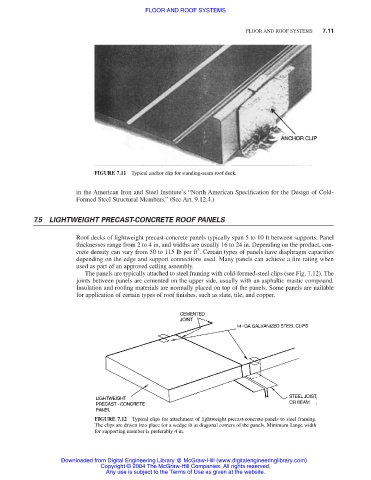
                                       FIGURE 7.11  Typical anchor clip for standing-seam roof deck.

                                  in the American Iron and Steel Institute’s “North American Specification for the Design of Cold-
                                  Formed Steel Structural Members.” (See Art. 9.12.4.)

                      7.5 LIGHTWEIGHT PRECAST-CONCRETE ROOF PANELS

                                  Roof decks of lightweight precast-concrete panels typically span 5 to 10 ft between supports. Panel
                                  thicknesses range from 2 to 4 in, and widths are usually 16 to 24 in. Depending on the product, con-
                                                                    3
                                  crete density can vary from 50 to 115 lb per ft . Certain types of panels have diaphragm capacities
                                  depending on the edge and support connections used. Many panels can achieve a fire rating when
                                  used as part of an approved ceiling assembly.
                                    The panels are typically attached to steel framing with cold-formed-steel clips (see Fig. 7.12). The
                                  joints between panels are cemented on the upper side, usually with an asphaltic mastic compound.
                                  Insulation and roofing materials are normally placed on top of the panels. Some panels are nailable
                                  for application of certain types of roof finishes, such as slate, tile, and copper.


                                       FIGURE 7.12  Typical clips for attachment of lightweight precast-concrete panels to steel framing.
                                       The clips are driven into place for a wedge fit at diagonal corners of the panels. Minimum flange width
                                       for supporting member is preferably 4 in.


                              Downloaded from Digital Engineering Library @ McGraw-Hill (www.digitalengineeringlibrary.com)
                                         Copyright © 2004 The McGraw-Hill Companies. All rights reserved.
                                          Any use is subject to the Terms of Use as given at the website.

