


Page 393 - Sustainable On-Site CHP Systems Design, Construction, and Operations
P. 393
366    Ca s e  S t u d y 4


                  Campus load = 25,000 lb/h                Campus load = 50,000 lb/h


           600                                      600
            400                                     400
                                                    200
            200
          Net result ($/h)  –200 0                Net result ($/h)  –200 0       0.15


                                         0.13
                                                                              0.11
           –400                         0.11 0.15   –400                     0.09 0.13
                                       0.09         –600                    0.07 Elec. rate ($/kWh)
            –600                       Elec. rate ($/kWh)  0.20  0.30
               0.20                  0.07                                 0.05
                     0.30                                         0.40  0.50
                           0.40     0.05                  Gas rate ($/m )
                                                                  3
                           3
                  Gas rate ($/m )  0.50
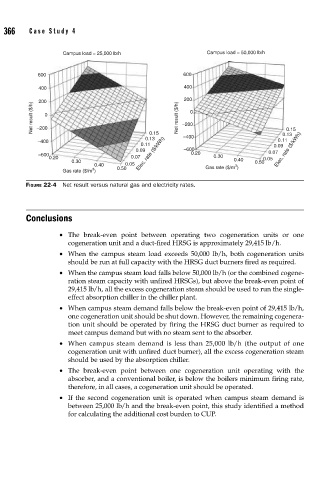
        FIGURE 22-4  Net result versus natural gas and electricity rates.

        Conclusions

                 •  The break-even point between operating two cogeneration units or one
                    cogeneration unit and a duct-fired HRSG is approximately 29,415 lb/h.
                 •  When the campus steam load exceeds 50,000 lb/h, both cogeneration units
                    should be run at full capacity with the HRSG duct burners fired as required.
                 •  When the campus steam load falls below 50,000 lb/h (or the combined cogene-
                    ration steam capacity with unfired HRSGs), but above the break-even point of
                    29,415 lb/h, all the excess cogeneration steam should be used to run the single-
                    effect absorption chiller in the chiller plant.
                 •  When campus steam demand falls below the break-even point of 29,415 lb/h,
                    one cogeneration unit should be shut down. However, the remaining cogenera-
                    tion unit should be operated by firing the HRSG duct burner as required to
                    meet campus demand but with no steam sent to the absorber.
                 •  When campus steam demand is less than 25,000 lb/h (the output of one
                    cogeneration unit with unfired duct burner), all the excess cogeneration steam
                    should be used by the absorption chiller.
                 •  The break-even point between one cogeneration unit operating with the
                    absorber, and a conventional boiler, is below the boilers minimum firing rate,
                    therefore, in all cases, a cogeneration unit should be operated.
                 •  If the second cogeneration unit is operated when campus steam demand is
                    between 25,000 lb/h and the break-even point, this study identified a method
                    for calculating the additional cost burden to CUP.

