


Page 179 - The CNN Effect in Action - How the News Media Pushed the West toward War ini Kosovo
P. 179
1403975191ts08.qxd  19-2-07  05:08 PM  Page 144
                                                         144
                                                                 THE CNN EFFECT IN ACTION
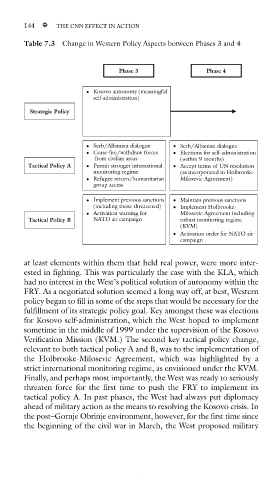
                                                         Table 7.3 Change in Western Policy Aspects between Phases 3 and 4
                                                                                 Phase 3
                                                                                                       Phase 4
                                                                         • Kosovo autonomy (meaningful
                                                                          self-administration)
                                                          Strategic Policy
                                                                         • Serb/Albanian dialogue
                                                                                              • Serb/Albanian dialogue
                                                                         • Cease-fire/withdraw forces
                                                                                              • Elections for self-administration
                                                                           from civilian areas
                                                                                                (within 9 months)
                                                                         • Permit stronger international
                                                          Tactical Policy A
                                                                                              • Accept terms of UN resolution
                                                                          monitoring regime
                                                                                                (as incorporated in Holbrooke-
                                                                                                Milosevic Agreement)
                                                                         • Refugee return/humanitarian
                                                                          group access
                                                                         • Implement previous sanctions
                                                                                              • Maintain previous sanctions
                                                                          (including those threatened)
                                                                                              • Implement Holbrooke-
                                                                                                Milosevic Agreement including
                                                                         • Activation warning for
                                                          Tactical Policy B
                                                                                                robust monitoring regime
                                                                          NATO air campaign
                                                                                                (KVM)
                                                                                              • Activation order for NATO air
                                                                                                campaign
                                                         at least elements within them that held real power, were more inter-
                                                         ested in fighting. This was particularly the case with the KLA, which
                                                         had no interest in the West’s political solution of autonomy within the
                                                         FRY. As a negotiated solution seemed a long way off, at best, Western
                                                         policy began to fill in some of the steps that would be necessary for the
                                                         fulfillment of its strategic policy goal. Key amongst these was elections
                                                         for Kosovo self-administration, which the West hoped to implement
                                                         sometime in the middle of 1999 under the supervision of the Kosovo
                                                         Verification Mission (KVM.) The second key tactical policy change,
                                                         relevant to both tactical policy A and B, was to the implementation of
                                                         the Holbrooke-Milosevic Agreement, which was highlighted by a
                                                         strict international monitoring regime, as envisioned under the KVM.
                                                         Finally, and perhaps most importantly, the West was ready to seriously
                                                         threaten force for the first time to push the FRY to implement its
                                                         tactical policy A. In past phases, the West had always put diplomacy
                                                         ahead of military action as the means to resolving the Kosovo crisis. In
                                                         the post–Gornje Obrinje environment, however, for the first time since
                                                         the beginning of the civil war in March, the West proposed military

