


Page 355 - Thermal Hydraulics Aspects of Liquid Metal Cooled Nuclear Reactors
P. 355
Core thermal hydraulics                                           321


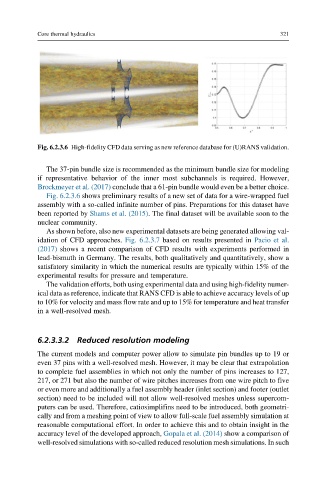
           Fig. 6.2.3.6 High-fidelity CFD data serving as new reference database for (U)RANS validation.


              The 37-pin bundle size is recommended as the minimum bundle size for modeling
           if representative behavior of the inner most subchannels is required. However,
           Brockmeyer et al. (2017) conclude that a 61-pin bundle would even be a better choice.
              Fig. 6.2.3.6 shows preliminary results of a new set of data for a wire-wrapped fuel
           assembly with a so-called infinite number of pins. Preparations for this dataset have
           been reported by Shams et al. (2015). The final dataset will be available soon to the
           nuclear community.
              As shown before, also new experimental datasets are being generated allowing val-
           idation of CFD approaches. Fig. 6.2.3.7 based on results presented in Pacio et al.
           (2017) shows a recent comparison of CFD results with experiments performed in
           lead-bismuth in Germany. The results, both qualitatively and quantitatively, show a
           satisfatory similarity in which the numerical results are typically within 15% of the
           experimental results for pressure and temperature.
              The validation efforts, both using experimental data and using high-fidelity numer-
           ical data as reference, indicate that RANS CFD is able to achieve accuracy levels of up
           to 10% for velocity and mass flow rate and up to 15% for temperature and heat transfer
           in a well-resolved mesh.


           6.2.3.3.2 Reduced resolution modeling
           The current models and computer power allow to simulate pin bundles up to 19 or
           even 37 pins with a well-resolved mesh. However, it may be clear that extrapolation
           to complete fuel assemblies in which not only the number of pins increases to 127,
           217, or 271 but also the number of wire pitches increases from one wire pitch to five
           or even more and additionally a fuel assembly header (inlet section) and footer (outlet
           section) need to be included will not allow well-resolved meshes unless supercom-
           puters can be used. Therefore, catiosimplifins need to be introduced, both geometri-
           cally and from a meshing point of view to allow full-scale fuel assembly simulation at
           reasonable computational effort. In order to achieve this and to obtain insight in the
           accuracy level of the developed approach, Gopala et al. (2014) show a comparison of
           well-resolved simulations with so-called reduced resolution mesh simulations. In such

