


Page 178 - Volcanic Textures A Guide To The Interpretation of Textures In Volcanic Rocks
P. 178
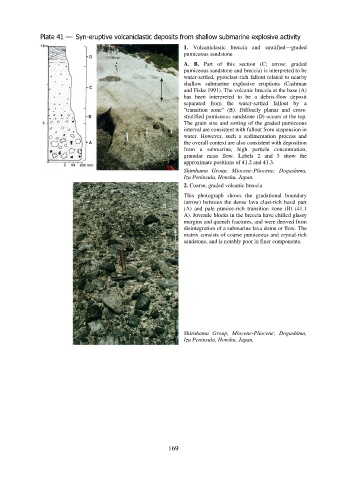
Plate 41 —  Syn-eruptive volcaniclastic deposits from shallow submarine explosive activity
                                                                  1. Volcaniclastic  breccia and  stratified—graded
                                                                  pumiceous sandstone
                                                                  A,  B. Part  of this section  (C; arrow; graded
                                                                  pumiceous sandstone and breccia) is interpreted to be
                                                                  water-settled, pyroclast-rich fallout related to nearby
                                                                  shallow submarine explosive eruptions  (Cashman
                                                                  and Fiske 1991). The volcanic breccia at the base (A)
                                                                  has  been interpreted to  be a debris-flow  deposit
                                                                  separated from the water-settled fallout by a
                                                                  "transition zone" (B).  Diffusely planar and cross-
                                                                  stratified pumiceous sandstone (D) occurs at the top.
                                                                  The grain size and sorting of the graded pumiceous
                                                                  interval are consistent with fallout from suspension in
                                                                  water.  However, such a sedimentation process and
                                                                  the overall context are also consistent with deposition
                                                                  from a submarine, high particle concentration,
                                                                  granular mass flow. Labels 2 and  3 show the
                                                                  approximate positions of 41.2 and 41.3.
                                                                   Shimhama Group,  Miocene-Pliocene; Dogashima,
                                                                  Izu Peninsula, Honshu, Japan.
                                                                  2. Coarse, graded volcanic breccia
                                                                  This photograph shows the gradational boundary
                                                                  (arrow) between the dense lava clast-rich basal part
                                                                  (A) and pale  pumice-rich transition zone  (B) (41.1
                                                                  A). Juvenile blocks in the breccia have chilled glassy
                                                                  margins and quench fractures, and were derived from
                                                                  disintegration of a submarine lava dome or flow. The
                                                                  matrix consists of coarse pumiceous and crystal-rich
                                                                  sandstone, and is notably poor in finer components.


                                                                  Shirahama  Group, Miocene-Pliocene; Dogashima,
                                                                   Izu Peninsula, Honshu, Japan.


                                                            169

