


Page 142 - Wire Bonding in Microelectronics
P. 142
120    Cha pte r  F o u r


         Appendix 4B  The Nondestructive Bond Pull Test


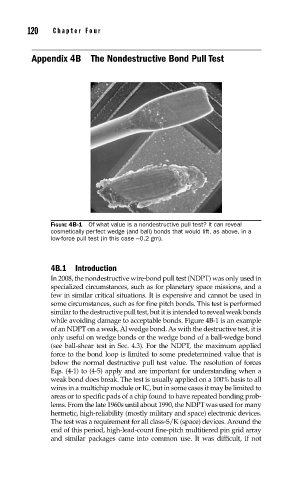
              FIGURE 4B-1  Of what value is a nondestructive pull test? It can reveal
              cosmetically perfect wedge (and ball) bonds that would lift, as above, in a
              low-force pull test (in this case ~0.2 gm).


              4B.1 Introduction
              In 2008, the nondestructive wire-bond pull test (NDPT) was only used in
              specialized circumstances, such as for planetary space missions, and a
              few in similar critical situations. It is expensive and cannot be used in
              some circumstances, such as for fine pitch bonds. This test is performed
              similar to the destructive pull test, but it is intended to reveal weak bonds
              while avoiding damage to acceptable bonds. Figure 4B-1 is an example
              of an NDPT on a weak, Al wedge bond. As with the destructive test, it is
              only useful on wedge bonds or the wedge bond of a ball-wedge bond
              (see ball-shear test in Sec. 4.3). For the NDPT, the maximum applied
              force to the bond loop is limited to some predetermined value that is
              below the normal destructive pull test value. The resolution of forces
              Eqs. (4-1) to (4-5) apply and are important for understanding when a
              weak bond does break. The test is usually applied on a 100% basis to all
              wires in a multichip module or IC, but in some cases it may be limited to
              areas or to specific pads of a chip found to have repeated bonding prob-
              lems. From the late 1960s until about 1990, the NDPT was used for many
              hermetic, high-reliability (mostly military and space) electronic devices.
              The test was a requirement for all class-S/K (space) devices. Around the
              end of this period, high-lead-count fine-pitch multitiered pin grid array
              and similar packages came into common use. It was difficult, if not

