


Page 453 - The ISA Handbook in Contemporary Sociology
P. 453
9781412934633-Chap-28  1/10/09  8:58 AM  Page 424


                   424               THE ISA HANDBOOK IN CONTEMPORARY SOCIOLOGY


                                               These strategies are determined
                                                   within the context of a
                                               particular language and culture.
                       Unmarked conventionalized usage (with adults) results in use of the title of H’s greatest status

                                  SAMPLE STRATEGIES  FROM EUROPEAN PORTUGUESE
                                (In situations of protocol, a marked conventionalized form is one that does not adhere to protocolar norms.)
                              A marked conventionalized form would be the rejection of social norms of appropriateness.
                                  Strategy 1:   Rely on a third party to provide relevant information regarding the
                                           education and/or social class of the stranger.
                                  Strategy 2:   Observe how others address H and choose an initial form one from
                                           the highest category heard.
                                  Strategy 3:   In the absence of other information, use manner of dress as a
                                           guideline in addressing the stranger.
                                             Source:  Adapted from Oliveira Medeiros (1994: 35-36)
                                    Level            Address Form(s)
                           Situations of PROTOCOL would require forms of Level 6 or 7.
                                     1   TU
                                               (As an initial form, likely restricted to children
                                                [to approx. age 16], or school colleagues)
                                     2   FN, LN or NICKNAME      [FN = First Name, LN = Last Name]
                                                      (The same as for tu.)          ↓      Strategies used for selecting a first form may result in the selection of a form of almost any level.
                                     3   VOCÊ
                                            (Usage of você as a first form varies highly and is rare;  ↓
                                           it would not be chosen in instances of protocol, nor when
                                                the speaker knows the hearer has a title.)  ↓
                                     4   [VOCÊ]
                                          (On the conventionalized plane use of the 3rd person singular  ↓
                                             form of the verb without a pronoun can be part of a
                                                 wait-and-see strategy while the speaker
                                              collects information on the status of the hearer.)  ↓
                                     5   SENHOR(A)
                                            (Use of o (a) Sr (a)  can be a stylistic option to avoid the  ↓
                                            “heaviness” of continual title use.)
                                     6   TITLES                                      ↓
                                     6a     Social titles
                                            Academic titles
                                     6b
                                            Professional titles                      ↓
                                     6c     Administrative titles
                         known by S.  7  (On the conventionalized plane, men would be addressed  ↓
                                     6d
                                                   as Title + LN [not FN] at the first meeting.)
                                         VOSSA EXCELÊNCIA
                                             (Use is rare in oral form, and titles incorporating o Sr.
                                             have gained in popularity [e.g., o Sr. Presidente];  ↓
                                             however, situations of protocol may require its use.)
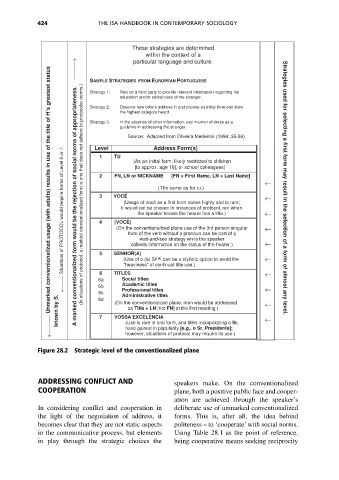
                   Figure 28.2  Strategic level of the conventionalized plane


                   ADDRESSING CONFLICT AND                 speakers make. On the conventionalized
                   COOPERATION                             plane, both a positive public face and cooper-
                                                           ation are achieved through the speaker’s
                   In considering conflict and cooperation in   deliberate use of unmarked conventionalized
                   the light of the negotiation of address, it  forms.  This is, after all, the idea behind
                   becomes clear that they are not static aspects  politeness – to ‘cooperate’ with social norms.
                   in the communicative process, but elements  Using Table 28.1 as the point of reference,
                   in play through the strategic choices the  being cooperative means seeking reciprocity

