


Page 454 - The ISA Handbook in Contemporary Sociology
P. 454
9781412934633-Chap-28  1/10/09  8:58 AM  Page 425


                                              STRATEGIC MODEL OF ADDRESS                     425


                                      STRATEGIES  FOR  RENEGOTIATING  AN  ADDRESS  FORM  RELATIONSHIP
                               (N.B. Explicit use of você is one of the most offensive mechanisms for marking anger, despite its central location in the chart.)
                                          The speakers negotiate usage they find comfortable for the
                            The greater the distance between the unmarked form and the marked, the greater is the impact of the marked form.
                                       developing relationship. The pattern(s) may follow conventionalized
                                              norms of usage, or they may fall outside them.
                                  SAMPLE STRATEGIES  FROM EUROPEAN PORTUGUESE
                        Marked negotiated usage tends to be in the direction of greater conventionalized formality.
                                  Strategy 1:   Suggest use of new form: Wouldn’t it be easier if we address each other
                                            by tu?
                                  Strategy 2:   Ask to use the new form: “Do you mind if I address you by tu?”
                                  Strategy 3:   Ask H about address preferences. (S hopes H will respond by agreeing
                                            to a form signifying greater intimacy.)
                                  Strategy 4:   Invite H to use a new form: “(If you like,) [Y]ou may address me by
                                            tu.”
                                  Strategy 5:   Verbally clue change to a new form: “I’m going to begin addressing
                                            you by tu,” giving H an opportunity to object.

                                            Source: Adapted from de Oliveira (1994: 38-39)
                                    Level                 Address Form(s)
                                     1   TU
                                                   (Once speakers have negotiated use of tu,
                                                     level 1 and level 2 forms co-occur.)
                                     2   FN, LN or NICKNAME    [FN = First Name, LN = Last Name]

                                     3   VOCÊ                                                Strategies used for renegotiation generally take the relationship to a more intimate level
                                          (Usage is highly idiosyncratic; e.g., it can denote anger or to disambiguate
                                                     when the intended referent is unclear.)
                                     4   [VOCÊ]
                                             (In this plane use of the 3rd person singular form of the verb
                                              without a pronoun can be a stylistic option to serve as a     Forms indicating greater familiarity (você and V.Ex.(a)  a being exceptions)
                                                    placeholder for a more formal form,
                                                without the “heaviness” of continual pronoun use.)
                                     5    SENHOR(A)
                                                      (a)
                                                (Use of Sr   can be a stylistic option to avoid the
                                                     “heaviness” of continual title use.)
                                     6   TITLES
                                    6a      Social titles
                                            Academic titles
                                    6b
                                            Professional titles
                                    6c
                                            Administrative titles
                                    6d
                                           (One difference in the negotiated plane over the conventionalized is
                                                        greater use of Title + FN,
                                                       rather than LN, with men.)
                                     7    VOSSA EXCELÊNCIA
                                                    (On the negotiated plane, use of this form
                                                    would most likely be interpreted as ironic.)
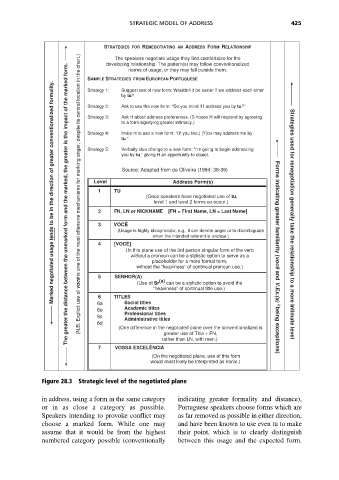
                    Figure 28.3  Strategic level of the negotiated plane

                    in address, using a form in the same category  indicating greater formality and distance),
                    or in as close a category as possible.  Portuguese speakers choose forms which are
                    Speakers intending to provoke conflict may  as far removed as possible in either direction,
                    choose a marked form.  While one may    and have been known to use even tu to make
                    assume that it would be from the highest  their point, which is to clearly distinguish
                    numbered category possible (conventionally  between this usage and the expected form.

