


Page 399 - Analog and Digital Filter Design
P. 399
396  Analog and Digital Filter Design


                                        INPUT                                  +   OUTPUT
                                                               1      A0

                                               !
                                                             I llz


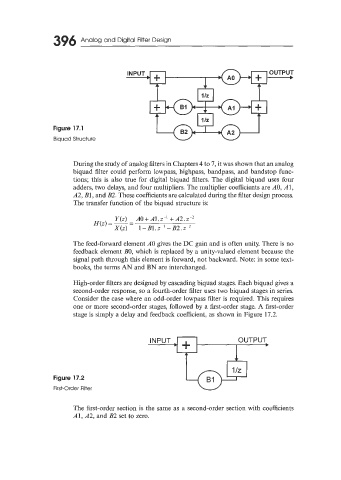
                 Figure 17.1                                  1  Iz
                 Biquad Structure


                       During the study of analog filters in Chapters 4 to 7, it was shown that an analog
                       biquad filter could perform lowpass, highpass, bandpass, and bandstop func-
                       tions; this is also true for digital biquad filters. The digital biquad uses four
                       adders, two delays, and four multipliers. The multiplier coefficients are AO, A 1,
                       A2, B1, and B2. These coefficients are calculated during the filter design process.
                       The transfer function of the biquad structure is:

                                    Y(z)  AO+Al.z-’ +A2.z-’
                              H(2) = -
                                         -
                                         -
                                    X(Z)  1-Bl.z-l  -B2.2-*
                       The feed-forward element A0 gives the DC gain and is often unity. There is no
                       feedback element BO,  which is replaced by a unity-valued element because the
                       signal path through this element is forward, not backward. Note: in some text-
                       books, the terms AN and BN are interchanged.

                       High-order filters are designed by cascading biquad stages. Each biquad gives a
                       second-order response, so a fourth-order filter uses two biquad stages in series.
                       Consider the case where an odd-order lowpass filter is required. This requires
                       one or more second-order stages, followed by a first-order stage. A first-order
                       stage is simply a delay and feedback coefficient, as shown in Figure 17.2.


                                                      ’+                  OUTPUT
                                               INPUT


                 Figure 17.2
                 First-Order Filter


                       The first-order section is the same as a second-order section with coefficients
                       Al, A2, and B2 set to zero.

