


Page 136 - Bebop to The Boolean Boogie An Unconventional Guide to Electronics Fundamentals, Components, and Processes
P. 136
Using Primitive Logic Functions to Build More Complex Functions  w  1 17

                  Both Reset and Set Active                Reset and Set Go Inactive


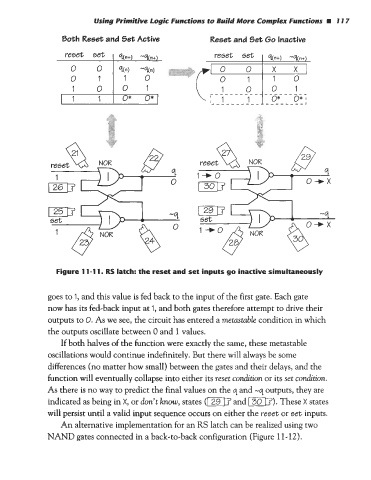
                 Figure 11-1 1. RS latch: the reset and set inputs go inactive simultaneously


              goes to 1,  and this value is fed back to the input of the first gate. Each gate
              now has its fed-back input at I, and both gates therefore attempt to drive their
              outputs to 0. As we see, the circuit has entered a metastable condition in which
              the outputs oscillate between 0 and 1 values.
                  If both halves of the function were exactly the same, these metastable
              oscillations would continue indefinitely. But there will always be some
              differences (no matter how small) between the gates and their delays, and the
              function will eventually collapse into either its reset condition or its set condition.
              As there is no way to predict the final values on the s, and -4.  outputs, they are
              indicated as being in X,  or don't know, states (PI and 130). These X states
              will persist until a valid input sequence occurs on either the reset or set inputs.
                  An alternative implementation for an RS latch can be realized using two
              NAND gates connected in a back-to-back configuration (Figure 11-12).

