


Page 546 - Cam Design Handbook
P. 546
THB16  9/19/03  8:04 PM  Page 534

          534                      CAM DESIGN HANDBOOK

                                                      Cam


                  Lash compensator
                  hydraulic lifter


                                                                 Valve


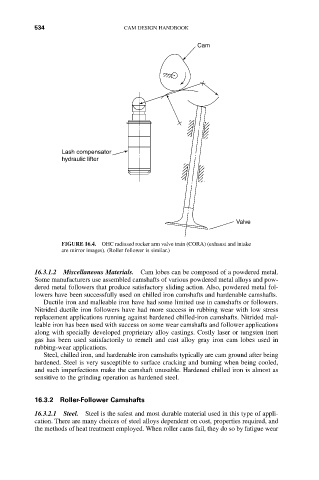
                  FIGURE 16.4.  OHC radiused rocker arm valve train (CORA) (exhaust and intake
                  are mirror images). (Roller follower is similar.)


          16.3.1.2 Miscellaneous Materials.  Cam lobes can be composed of a powdered metal.
          Some manufacturers use assembled camshafts of various powdered metal alloys and pow-
          dered metal followers that produce satisfactory sliding action. Also, powdered metal fol-
          lowers have been successfully used on chilled iron camshafts and hardenable camshafts.
             Ductile iron and malleable iron have had some limited use in camshafts or followers.
          Nitrided ductile iron followers have had more success in rubbing wear with low stress
          replacement applications running against hardened chilled-iron camshafts. Nitrided mal-
          leable iron has been used with success on some wear camshafts and follower applications
          along with specially developed proprietary alloy castings. Costly laser or tungsten inert
          gas  has  been  used  satisfactorily  to  remelt  and  cast  alloy  gray  iron  cam  lobes  used  in
          rubbing-wear applications.
             Steel, chilled iron, and hardenable iron camshafts typically are cam ground after being
          hardened. Steel is very susceptible to surface cracking and burning when being cooled,
          and such imperfections make the camshaft unusable. Hardened chilled iron is almost as
          sensitive to the grinding operation as hardened steel.


          16.3.2 Roller-Follower Camshafts
          16.3.2.1 Steel.  Steel is the safest and most durable material used in this type of appli-
          cation. There are many choices of steel alloys dependent on cost, properties required, and
          the methods of heat treatment employed. When roller cams fail, they do so by fatigue wear

