


Page 551 - Cam Design Handbook
P. 551
THB16  9/19/03  8:04 PM  Page 539

                                AUTOMOTIVE CAMSHAFT DYNAMICS               539

               Harmonic  analysis  with  the  lowest  jerk  curve  values  requires  fine-tuning  on  the
            dynamometer to adjust the valve lash intake and exhaust system. This is to maximize the
            engine horsepower. To quote Crane (2000), “Do what the engine wants.”
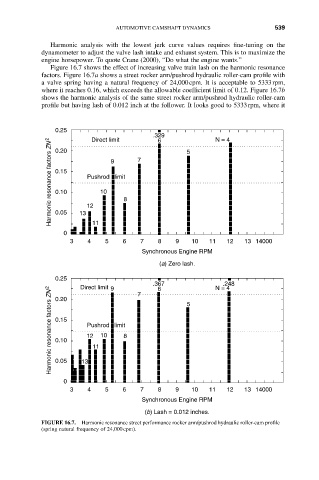
               Figure 16.7 shows the effect of increasing valve train lash on the harmonic resonance
            factors. Figure 16.7a shows a street rocker arm/pushrod hydraulic roller-cam profile with
            a valve spring having a natural frequency of 24,000cpm. It is acceptable to 5333rpm,
            where it reaches 0.16, which exceeds the allowable coefficient limit of 0.12. Figure 16.7b
            shows the harmonic analysis of the same street rocker arm/pushrod hydraulic roller-cam
            profile but having lash of 0.012 inch at the follower. It looks good to 5333rpm, where it


                0.25
                                          .329     5       N = 4
                          Direct limit
               Harmonic resonance factors ZN  2  0.15  12  10  9  8  7
                                            6
                0.20

                         Pushrod   limit
                0.10


                0.05

                  0   13  11
                    3    4   5    6    7    8   9    10   11  12   13 14000
                                       Synchronous Engine RPM
                                            (a) Zero lash.

                0.25
                                                             .248
                                          .367      5      N = 4
                       Direct limit
                               9
               Harmonic resonance factors ZN  2  0.15  12 11  10  8
                                            6
                                      7
                0.20
                         Pushrod   limit
                0.10

                0.05


                  0    13
                    3    4   5    6    7    8   9    10   11  12   13 14000
                                       Synchronous Engine RPM
                                        (b) Lash = 0.012 inches.
            FIGURE 16.7.  Harmonic resonance street performance rocker arm/pushrod hydraulic roller-cam profile
            (spring natural frequency of 24,000cpm).

