


Page 334 - E-Bussiness and E-Commerce Management Strategy, Implementation, and Practice
P. 334
M05_CHAF9601_04_SE_C05.QXD:D01_CHAF7409_04_SE_C01.QXD  16/4/09  11:12  Page 301


                                                                                 Chapter 5 E-business strategy  301


                                               Market development strategies      Diversification strategies
                                            Use Internet for targeting:     Using the Internet to support:
                                            • New geographic markets        • Diversification into related businesses
                                          markets  • New customer segments  • Diversification into unrelated businesses


                                          New                               • Upstream integration (with suppliers)
                                                                            • Downstream integration
                                        growth                               (with intermediaries)


                                        Market  Use Internet for:           Use Internet for:
                                                                               Product development strategies
                                               Market penetration strategies
                                            • Market share growth – compete  • Adding value to existing products
                                          markets  • Customer loyalty improvement – migrate  • Developing digital products
                                             more effectively online
                                                                             (new delivery/usage models)
                                          Existing  existing customers online and add value  • Changing payment models
                                             to existing products, services and brand
                                                                             (Subscription, per use, bundling)
                                            • Customer value improvement – increase
                                                                            • Increasing product range
                                             customer profitability by decreasing
                                                                             (Especially e-retailers)
                                             cost to serve and increase purchase or
                                             usage frequency and quantity
                                                     Existing products                New products
                                                                     Product growth

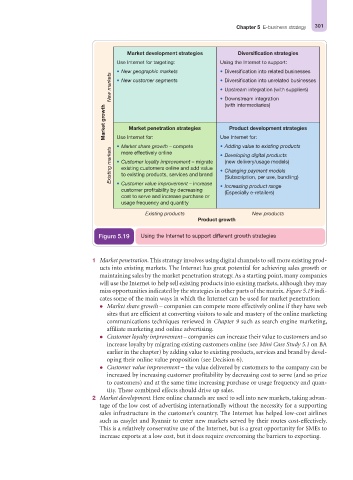
                                      Figure 5.19  Using the Internet to support different growth strategies


                                    1 Market penetration. This strategy involves using digital channels to sell more existing prod-
                                      ucts into existing markets. The Internet has great potential for achieving sales growth or
                                      maintaining sales by the market penetration strategy. As a starting point, many companies
                                      will use the Internet to help sell existing products into existing markets, although they may
                                      miss opportunities indicated by the strategies in other parts of the matrix. Figure 5.19 indi-
                                      cates some of the main ways in which the Internet can be used for market penetration:
                                        Market share growth – companies can compete more effectively online if they have web

                                        sites that are efficient at converting visitors to sale and mastery of the online marketing
                                        communications techniques reviewed in Chapter 9 such as search engine marketing,
                                        affiliate marketing and online advertising.
                                        Customer loyalty improvement – companies can increase their value to customers and so
                                        increase loyalty by migrating existing customers online (see Mini Case Study 5.1 on BA
                                        earlier in the chapter) by adding value to existing products, services and brand by devel-
                                        oping their online value proposition (see Decision 6).
                                        Customer value improvement – the value delivered by customers to the company can be
                                        increased by increasing customer profitability by decreasing cost to serve (and so price
                                        to customers) and at the same time increasing purchase or usage frequency and quan-
                                        tity. These combined effects should drive up sales.
                                    2 Market development. Here online channels are used to sell into new markets, taking advan-
                                      tage of the low cost of advertising internationally without the necessity for a supporting
                                      sales infrastructure in the customer’s country. The Internet has helped low-cost airlines
                                      such as easyJet and Ryanair to enter new markets served by their routes cost-effectively.
                                      This is a relatively conservative use of the Internet, but is a great opportunity for SMEs to
                                      increase exports at a low cost, but it does require overcoming the barriers to exporting.

