


Page 295 - Fluid mechanics, heat transfer, and mass transfer
P. 295
SHELL AND TUBE HEAT EXCHANGERS
            276


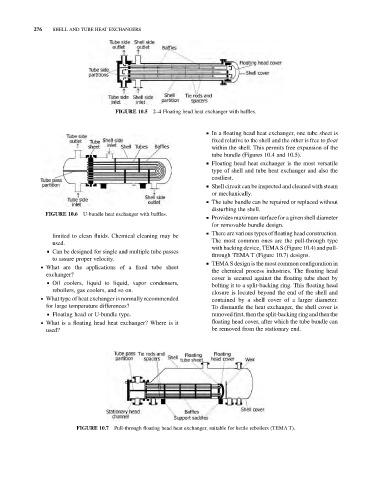
                                       FIGURE 10.5 2–4 Floating head heat exchanger with baffles.


                                                                     & In a floating head heat exchanger, one tube sheet is
                                                                       fixed relative to the shell and the other is free to float
                                                                       within the shell. This permits free expansion of the
                                                                       tube bundle (Figures 10.4 and 10.5).
                                                                     & Floating head heat exchanger is the most versatile
                                                                       type of shell and tube heat exchanger and also the
                                                                       costliest.
                                                                     & Shell circuit can be inspected and cleaned with steam
                                                                       or mechanically.
                                                                     & The tube bundle can be repaired or replaced without
                                                                       disturbing the shell.
                            U-bundle heat exchanger with baffles.
                FIGURE 10.6
                                                                     & Provides maximum surface for a given shell diameter
                                                                       for removable bundle design.
                                                                     & There are various types of floating head construction.
                  limited to clean fluids. Chemical cleaning may be
                                                                       The most common ones are the pull-through type
                  used.
                                                                       with backing device, TEMA S (Figure 10.4) and pull-
                 & Can be designed for single and multiple tube passes
                                                                       through TEMA T (Figure 10.7) designs.
                  to assure proper velocity.
                                                                     & TEMA S design is the most common configuration in
               . What are the applications of a fixed tube sheet
                                                                       the chemical process industries. The floating head
                exchanger?
                                                                       cover is secured against the floating tube sheet by
                 & Oil coolers, liquid to liquid, vapor condensers,
                                                                       bolting it to a split-backing ring. This floating head
                  reboilers, gas coolers, and so on.
                                                                       closure is located beyond the end of the shell and
               . What type of heat exchanger is normally recommended   contained by a shell cover of a larger diameter.
                for large temperature differences?                     To dismantle the heat exchanger, the shell cover is
                 & Floating head or U-bundle type.                     removed first, then the split-backing ring and then the
               . What is a floating head heat exchanger? Where is it    floating head cover, after which the tube bundle can
                used?                                                  be removed from the stationary end.


                          FIGURE 10.7 Pull-through floating head heat exchanger, suitable for kettle reboilers (TEMA T).

