


Page 227 - Introduction to Mineral Exploration
P. 227
210   M.K.G. WHATELEY & B. SCOTT


                  (a)                                         (b)
                                                 A               10,000                    B          A
                      8
                    10
                                                                  5000
                    10 7      SAFE  AREA                          2000              D
                                                                                             C
                                           C                      1000
                    10 6                         B
                                                                  500        F
                                                                                      E
                    10 5              E                           200
                                             D                        H
                   Mass (g)  10 4                               Mass (g)  100  G

                                                                   50
                         G
                                        F                                        SAFETY LINE
                    10 3                                           20
                                 SAFETY  LINE  UNSAFE  AREA         5
                         H                                         10
                    100


                     10                                             2
                                                                        I
                                                                    1
                          I
                      1                                               100  200  500  1  2  5  10  20  50  100
                                                                          µm                mm
                        100 200  500  1  2  5  1  2  5  10  20
                             µm      mm           cm                           Top particle size d
                                   Top particle size d
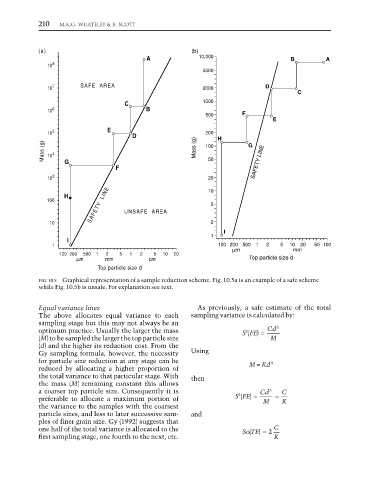
                  FIG. 10.5 Graphical representation of a sample reduction scheme. Fig. 10.5a is an example of a safe scheme
                  while Fig. 10.5b is unsafe. For explanation see text.


                  Equal variance lines                          As previously, a safe estimate of the total
                  The above allocates equal variance to each  sampling variance is calculated by:
                  sampling stage but this may not always be an
                  optimum practice. Usually the larger the mass              SFE)  =  Cd  3
                                                                              2
                                                                               (
                  (M) to be sampled the larger the top particle size                 M
                  (d) and the higher its reduction cost. From the
                  Gy sampling formula, however, the necessity  Using
                  for particle size reduction at any stage can be                    3
                  reduced by allocating a higher proportion of                 M = Kd
                  the total variance to that particular stage. With  then
                  the mass (M) remaining constant this allows
                  a coarser top particle size. Consequently it is           2     Cd  3  C
                                                                             (
                  preferable to allocate a maximum portion of              SFE)  =  M  =  K
                  the variance to the samples with the coarsest
                  particle sizes, and less to later successive sam-  and
                  ples of finer grain size. Gy (1992) suggests that
                  one half of the total variance is allocated to the         SoTE)  = 2  C
                                                                               (
                  first sampling stage, one fourth to the next, etc.                   K

