


Page 101 - Low Temperature Energy Systems with Applications of Renewable Energy
P. 101
90                  Low-Temperature Energy Systems with Applications of Renewable Energy


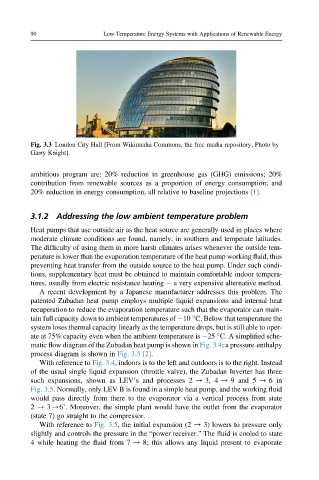
         Fig. 3.3 London City Hall [From Wikimedia Commons, the free media repository, Photo by
         Garry Knight].


         ambitious program are: 20% reduction in greenhouse gas (GHG) emissions; 20%
         contribution from renewable sources as a proportion of energy consumption; and
         20% reduction in energy consumption, all relative to baseline projections [1].


         3.1.2  Addressing the low ambient temperature problem
         Heat pumps that use outside air as the heat source are generally used in places where
         moderate climate conditions are found, namely, in southern and temperate latitudes.
         The difficulty of using them in more harsh climates arises whenever the outside tem-
         perature is lower than the evaporation temperature of the heat pump working fluid, thus
         preventing heat transfer from the outside source to the heat pump. Under such condi-
         tions, supplementary heat must be obtained to maintain comfortable indoor tempera-
         tures, usually from electric resistance heating e a very expensive alternative method.
            A recent development by a Japanese manufacturer addresses this problem. The
         patented Zubadan heat pump employs multiple liquid expansions and internal heat
         recuperation to reduce the evaporation temperature such that the evaporator can main-

         tain full capacity down to ambient temperatures of  10 C. Below that temperature the
         system loses thermal capacity linearly as the temperature drops, but is still able to oper-

         ate at 75% capacity even when the ambient temperature is  25 C. A simplified sche-
         matic flow diagram of the Zubadan heat pump is shown in Fig. 3.4; a pressure-enthalpy
         process diagram is shown in Fig. 3.5 [2].
            With reference to Fig. 3.4, indoors is to the left and outdoors is to the right. Instead
         of the usual single liquid expansion (throttle valve), the Zubadan Inverter has three
         such expansions, shown as LEV’s and processes 2 / 3, 4 / 9 and 5 / 6in
         Fig. 3.5. Normally, only LEV B is found in a simple heat pump, and the working fluid
         would pass directly from there to the evaporator via a vertical process from state
         2 / 3/6’. Moreover, the simple plant would have the outlet from the evaporator
         (state 7) go straight to the compressor.
            With reference to Fig. 3.5, the initial expansion (2 / 3) lowers to pressure only
         slightly and controls the pressure in the “power receiver.” The fluid is cooled to state
         4 while heating the fluid from 7 / 8; this allows any liquid present to evaporate

