


Page 105 - Low Temperature Energy Systems with Applications of Renewable Energy
P. 105
94                  Low-Temperature Energy Systems with Applications of Renewable Energy


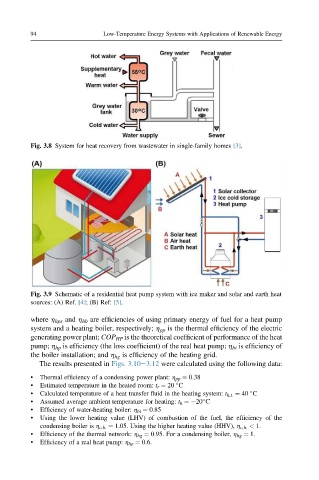
         Fig. 3.8 System for heat recovery from wastewater in single-family homes [3].


         Fig. 3.9 Schematic of a residential heat pump system with ice maker and solar and earth heat
         sources: (A) Ref. [4]; (B) Ref: [5].

         where h hps and h hb are efficiencies of using primary energy of fuel for a heat pump
         system and a heating boiler, respectively; h pp is the thermal efficiency of the electric
         generating power plant; COP HP is the theoretical coefficient of performance of the heat
         pump; h hp is efficiency (the loss coefficient) of the real heat pump; h bi is efficiency of
         the boiler installation; and h hg is efficiency of the heating grid.
            The results presented in Figs. 3.10e3.12 were calculated using the following data:
         •  Thermal efficiency of a condensing power plant: h pp ¼ 0.38
         •  Estimated temperature in the heated room: t r ¼ 20 C

         •  Calculated temperature of a heat transfer fluid in the heating system: t h.t. ¼ 40 C

         •  Assumed average ambient temperature for heating: t h ¼ 20 S

         •  Efficiency of water-heating boiler: h bi ¼ 0.85
         •  Using the lower heating value (LHV) of combustion of the fuel, the efficiency of the
            condensing boiler is h c.b. ¼ 1.05. Using the higher heating value (HHV), h c.b. < 1.
         •  Efficiency of the thermal network: h hg ¼ 0.95. For a condensing boiler, h hg ¼ 1.
         •  Efficiency of a real heat pump: h hp ¼ 0.6.

