


Page 107 - Low Temperature Energy Systems with Applications of Renewable Energy
P. 107
96                  Low-Temperature Energy Systems with Applications of Renewable Energy

             (A)  η rel                   (B) η rel
                 3                            3
                         12 3                                  1  23
                2.5                          2.5
                 2                            2
                1.5                          1.5
                 1                            1
                0.5                          0.5
                 0                            0
                  -20 -15 -10  -5  0  5  10  15 t0,°C  -20 -15 -10 -5  0  5  10  15  t0,°C
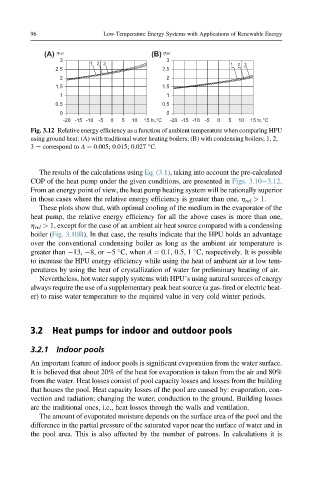
         Fig. 3.12 Relative energy efficiency as a function of ambient temperature when comparing HPU
         using ground heat: (A) with traditional water heating boilers; (B) with condensing boilers; 1, 2,
         3 e correspond to A ¼ 0.005; 0.015; 0.027 C.


            The results of the calculations using Eq. (3.1), taking into account the pre-calculated
         COP of the heat pump under the given conditions, are presented in Figs. 3.10e3.12.
         From an energy point of view, the heat pump heating system will be rationally superior
         in those cases where the relative energy efficiency is greater than one, h rel > 1.
            These plots show that, with optimal cooling of the medium in the evaporator of the
         heat pump, the relative energy efficiency for all the above cases is more than one,
         h rel > 1, except for the case of an ambient air heat source compared with a condensing
         boiler (Fig. 3.10B). In that case, the results indicate that the HPU holds an advantage
         over the conventional condensing boiler as long as the ambient air temperature is


         greater than  13,  8, or  5 C, when A ¼ 0.1, 0.5, 1 C, respectively. It is possible
         to increase the HPU energy efficiency while using the heat of ambient air at low tem-
         peratures by using the heat of crystallization of water for preliminary heating of air.
            Nevertheless, hot water supply systems with HPU’s using natural sources of energy
         always require the use of a supplementary peak heat source (a gas-fired or electric heat-
         er) to raise water temperature to the required value in very cold winter periods.


         3.2   Heat pumps for indoor and outdoor pools

         3.2.1  Indoor pools

         An important feature of indoor pools is significant evaporation from the water surface.
         It is believed that about 20% of the heat for evaporation is taken from the air and 80%
         from the water. Heat losses consist of pool capacity losses and losses from the building
         that houses the pool. Heat capacity losses of the pool are caused by: evaporation, con-
         vection and radiation; changing the water; conduction to the ground. Building losses
         are the traditional ones, i.e., heat losses through the walls and ventilation.
            The amount of evaporated moisture depends on the surface area of the pool and the
         difference in the partial pressure of the saturated vapor near the surface of water and in
         the pool area. This is also affected by the number of patrons. In calculations it is

