


Page 134 - Low Temperature Energy Systems with Applications of Renewable Energy
P. 134
Effective use of heat pumps for various heating applications      123


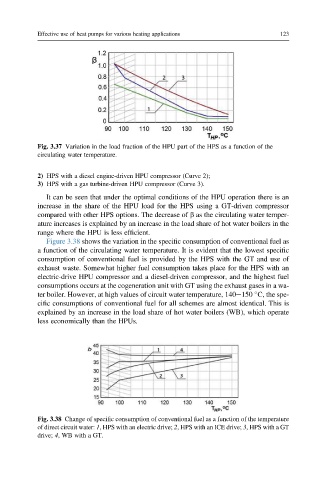
           Fig. 3.37 Variation in the load fraction of the HPU part of the HPS as a function of the
           circulating water temperature.

           2) HPS with a diesel engine-driven HPU compressor (Curve 2);
           3) HPS with a gas turbine-driven HPU compressor (Curve 3).
              It can be seen that under the optimal conditions of the HPU operation there is an
           increase in the share of the HPU load for the HPS using a GT-driven compressor
           compared with other HPS options. The decrease of b as the circulating water temper-
           ature increases is explained by an increase in the load share of hot water boilers in the
           range where the HPU is less efficient.
              Figure 3.38 shows the variation in the specific consumption of conventional fuel as
           a function of the circulating water temperature. It is evident that the lowest specific
           consumption of conventional fuel is provided by the HPS with the GT and use of
           exhaust waste. Somewhat higher fuel consumption takes place for the HPS with an
           electric-drive HPU compressor and a diesel-driven compressor, and the highest fuel
           consumptions occurs at the cogeneration unit with GT using the exhaust gases in a wa-
           ter boiler. However, at high values of circuit water temperature, 140e150 C, the spe-

           cific consumptions of conventional fuel for all schemes are almost identical. This is
           explained by an increase in the load share of hot water boilers (WB), which operate
           less economically than the HPUs.


           Fig. 3.38 Change of specific consumption of conventional fuel as a function of the temperature
           of direct circuit water: 1, HPS with an electric drive; 2, HPS with an ICE drive; 3, HPS with a GT
           drive; 4, WB with a GT.

