


Page 133 - Low Temperature Energy Systems with Applications of Renewable Energy
P. 133
122                 Low-Temperature Energy Systems with Applications of Renewable Energy


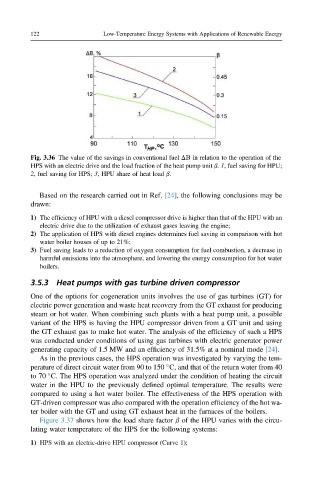
         Fig. 3.36 The value of the savings in conventional fuel DC in relation to the operation of the
         HPS with an electric drive and the load fraction of the heat pump unit b.1, fuel saving for HPU;
         2, fuel saving for HPS; 3, HPU share of heat load b.

            Based on the research carried out in Ref. [24], the following conclusions may be
         drawn:
         1) The efficiency of HPU with a diesel compressor drive is higher than that of the HPU with an
            electric drive due to the utilization of exhaust gases leaving the engine;
         2) The application of HPS with diesel engines determines fuel saving in comparison with hot
            water boiler houses of up to 21%;
         3) Fuel saving leads to a reduction of oxygen consumption for fuel combustion, a decrease in
            harmful emissions into the atmosphere, and lowering the energy consumption for hot water
            boilers.

         3.5.3  Heat pumps with gas turbine driven compressor

         One of the options for cogeneration units involves the use of gas turbines (GT) for
         electric power generation and waste heat recovery from the GT exhaust for producing
         steam or hot water. When combining such plants with a heat pump unit, a possible
         variant of the HPS is having the HPU compressor driven from a GT unit and using
         the GT exhaust gas to make hot water. The analysis of the efficiency of such a HPS
         was conducted under conditions of using gas turbines with electric generator power
         generating capacity of 1.5 MW and an efficiency of 31.5% at a nominal mode [24].
            As in the previous cases, the HPS operation was investigated by varying the tem-
         perature of direct circuit water from 90 to 150 C, and that of the return water from 40

         to 70 C. The HPS operation was analyzed under the condition of heating the circuit

         water in the HPU to the previously defined optimal temperature. The results were
         compared to using a hot water boiler. The effectiveness of the HPS operation with
         GT-driven compressor was also compared with the operation efficiency of the hot wa-
         ter boiler with the GT and using GT exhaust heat in the furnaces of the boilers.
            Figure 3.37 shows how the load share factor b of the HPU varies with the circu-
         lating water temperature of the HPS for the following systems:
         1) HPS with an electric-drive HPU compressor (Curve 1);

