


Page 207 - Low Temperature Energy Systems with Applications of Renewable Energy
P. 207
194                 Low-Temperature Energy Systems with Applications of Renewable Energy


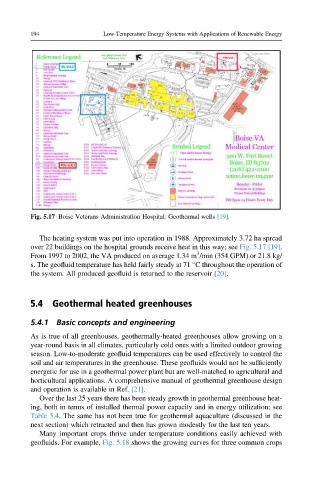
         Fig. 5.17 Boise Veterans Administration Hospital: Geothermal wells [19].


            The heating system was put into operation in 1988. Approximately 3.72 ha spread
         over 22 buildings on the hospital grounds receive heat in this way; see Fig. 5.17 [19].
                                                      3
         From 1997 to 2002, the VA produced on average 1.34 m /min (354 GPM) or 21.8 kg/

         s. The geofluid temperature has held fairly steady at 71 C throughout the operation of
         the system. All produced geofluid is returned to the reservoir [20].


         5.4   Geothermal heated greenhouses


         5.4.1  Basic concepts and engineering
         As is true of all greenhouses, geothermally-heated greenhouses allow growing on a
         year-round basis in all climates, particularly cold ones with a limited outdoor growing
         season. Low-to-moderate geofluid temperatures can be used effectively to control the
         soil and air temperatures in the greenhouse. These geofluids would not be sufficiently
         energetic for use in a geothermal power plant but are well-matched to agricultural and
         horticultural applications. A comprehensive manual of geothermal greenhouse design
         and operation is available in Ref. [21].
            Over the last 25 years there has been steady growth in geothermal greenhouse heat-
         ing, both in terms of installed thermal power capacity and in energy utilization; see
         Table 5.4. The same has not been true for geothermal aquaculture (discussed in the
         next section) which retracted and then has grown modestly for the last ten years.
            Many important crops thrive under temperature conditions easily achieved with
         geofluids. For example, Fig. 5.18 shows the growing curves for three common crops

